

Death is no different whined at than withstood.
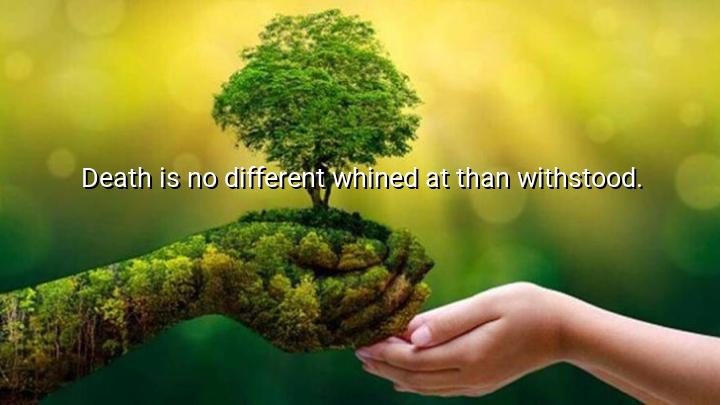




The quote "Death is no different whined at than withstood" by Philip Larkin suggests that the experience of death remains the same, regardless of how one reacts to it. Larkin implies that whether we complain, fear, or accept death, the outcome is inevitable and unchangeable. Whining about death, or struggling against it, doesn’t alter its nature or stop its arrival, just as withstanding it—accepting it or facing it with stoic endurance—does not change the fact that it is coming. In this sense, the quote speaks to the futility of resisting or lamenting the inevitability of death.
Larkin, known for his often bleak and realistic poetry, frequently explored themes of mortality, the passage of time, and the existential challenges of life. This quote reflects his philosophical approach to death, one that acknowledges its certainty without offering comfort or idealized notions about it. By stating that death is the same whether we "whine" or "withstand" it, Larkin emphasizes the absurdity of trying to control or change something as ultimate and uncontrollable as death.
The origin of this quote lies in Larkin’s broader body of work, which often delves into the human condition and the struggles we face with existential issues. His poems, such as Aubade, examine the awareness of mortality and the anxiety that often accompanies it. In this quote, Larkin expresses the notion that death is something that cannot be avoided, and no emotional response—whether it be fear, anger, or resignation—will alter its course.
Ultimately, Larkin’s quote serves as a reminder that death is inevitable, and that how we react to it—whether with complaints or stoicism—does not change its fundamental nature. It invites reflection on how we live with the knowledge of our eventual death and the ways in which we choose to face the inevitable end. In Larkin’s view, the only certainty in life is death, and how we respond to it ultimately makes no difference to the outcome.

AAdministratorAdministrator
Welcome, honored guests. Please leave a comment, we will respond soon