

Death is always around the corner, but often our society gives it inordinate help.
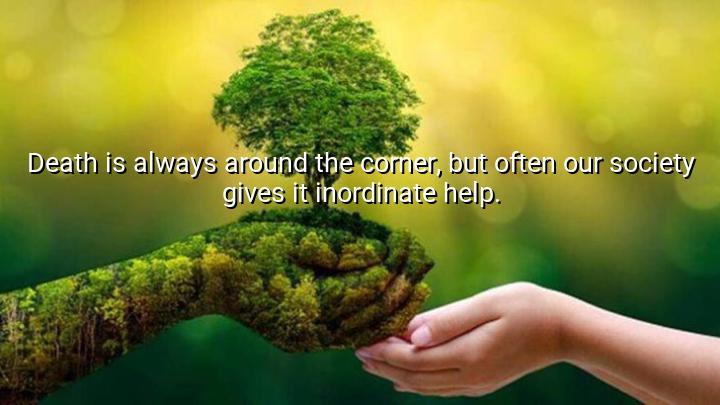




The quote "Death is always around the corner, but often our society gives it inordinate help" by Carter Burwell reflects on the prevalence of death in society and how, rather than simply being a natural part of life, society sometimes accelerates or exacerbates its arrival. Burwell, a composer known for his work on films such as Fargo and Twilight, uses this quote to highlight how societal factors, such as violence, war, poverty, or even the normalization of harmful behaviors, can contribute to the untimely deaths of individuals. Death, while inevitable, is often made more imminent by the systems in place within society.
The origin of this quote likely stems from Burwell's deep awareness of the darker aspects of human existence, explored through the stories he tells in his music. His work often deals with themes of mystery, loss, and the complex forces shaping human lives. This quote reflects an understanding that death isn't always a result of fate or natural causes, but that human and societal actions can hasten its occurrence. In this sense, he suggests that we, as a society, sometimes "assist" in the deaths of others through systems and actions that harm, neglect, or isolate individuals.
Burwell’s statement also comments on the irony of society's treatment of death. While death is an unavoidable part of the human condition, society often does little to address its root causes or mitigate the harm that leads to it. Instead, structural inequalities, conflict, and neglect can make the process of dying a more frequent or painful occurrence than necessary. The phrase "gives it inordinate help" suggests that society, rather than preventing suffering, often contributes to its escalation.
In essence, this quote urges reflection on how society influences death and suffering, questioning whether we are doing enough to prevent it or if we are, knowingly or unknowingly, pushing people toward it. Burwell's words encourage us to think critically about the role we all play in shaping the realities of life and death, and whether we are truly providing support for the living or hastening the end.

AAdministratorAdministrator
Welcome, honored guests. Please leave a comment, we will respond soon