

Death is a release from the impressions of the senses, and from desires that make us their puppets, and from the vagaries of the mind, and from the hard service of the flesh.
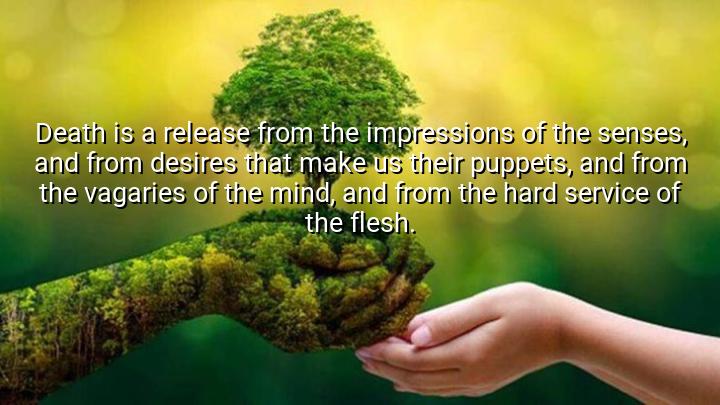




The quote "Death is a release from the impressions of the senses, and from desires that make us their puppets, and from the vagaries of the mind, and from the hard service of the flesh" by Marcus Aurelius reflects his stoic philosophy, which views death as a natural and liberating process. Aurelius suggests that death frees us from the physical and mental burdens that we endure throughout life. These include the constant demands of the senses, the desires that control us, the unpredictable whims of the mind, and the limitations of the body. By framing death in this way, Aurelius invites us to view it not with fear but as a final release from life's struggles.
In Stoic philosophy, the idea is that individuals are often enslaved by their senses and desires, constantly chasing pleasure or avoiding pain, which makes them vulnerable to the whims of external circumstances. By confronting death, we can escape from this cycle, transcending the fleeting nature of the physical world. Death represents an end to the struggles that the mind and body create, offering freedom from the temporary desires and fleeting experiences that dominate our lives.
The origin of this quote comes from Marcus Aurelius, the Roman Emperor and Stoic philosopher, who wrote his reflections on life, death, and morality in his personal journals, known as Meditations. These writings provide insight into his Stoic beliefs, which focused on virtue, wisdom, and accepting the natural order of the world. Aurelius viewed death as a natural part of life, something to be accepted calmly rather than feared. He believed that by recognizing the impermanence of life, we could achieve inner peace and liberation from worldly distractions.
Ultimately, Aurelius' quote encourages us to shift our perspective on death, seeing it not as an end to fear but as a release from the burdens of desires, sensory experiences, and the struggles of the body. By contemplating death in this way, we can strive to live a life of inner peace, freed from the forces that distract and control us.

AAdministratorAdministrator
Welcome, honored guests. Please leave a comment, we will respond soon