

Death hath a thousand doors to let out life: I shall find one.
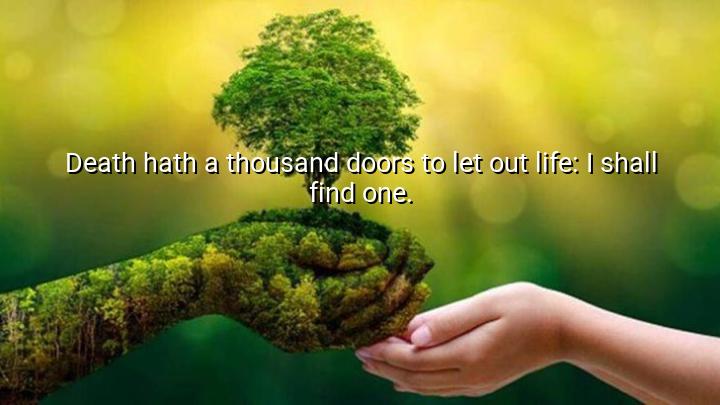




The quote "Death hath a thousand doors to let out life: I shall find one." by Philip Massinger explores the idea of death as an inevitable transition rather than an end. Massinger uses the metaphor of doors to depict the various pathways or opportunities through which life may be released from the physical body. The quote suggests that, while death can take many forms, it is not something to be feared or resisted, as it is simply another way for life to continue or transform.
Originating from Massinger's play The Roman Actor, this line reflects the dramatic and often tragic themes of his works. Known for writing about the struggles between human nature, fate, and moral dilemmas, Massinger often delved into the existential aspects of life and death. The quote captures a moment of acceptance and determination, as the speaker expresses a willingness to confront death when the time comes, acknowledging that death is not an end but merely a transition to something beyond.
The phrase "a thousand doors" signifies the multitude of possible ways that death might occur, yet the speaker does not feel powerless. The line "I shall find one" demonstrates a sense of resolve and agency, suggesting that the speaker will face death on their own terms, embracing whatever form it takes. It reflects the human desire for control over one’s fate, even in the face of the inevitable.
Ultimately, Massinger’s quote speaks to the inevitability of death and the ineffable nature of the end of life. It highlights the human desire for understanding and acceptance of mortality, as well as the belief that, while death is unavoidable, it can be approached with a sense of empowerment and dignity, finding peace in the face of life's ultimate conclusion.

AAdministratorAdministrator
Welcome, honored guests. Please leave a comment, we will respond soon