

Cultures are never merely intellectual constructs. They take form through the collective intelligence and memory, through a commonly held psychology and emotions, through spiritual and artistic communion.
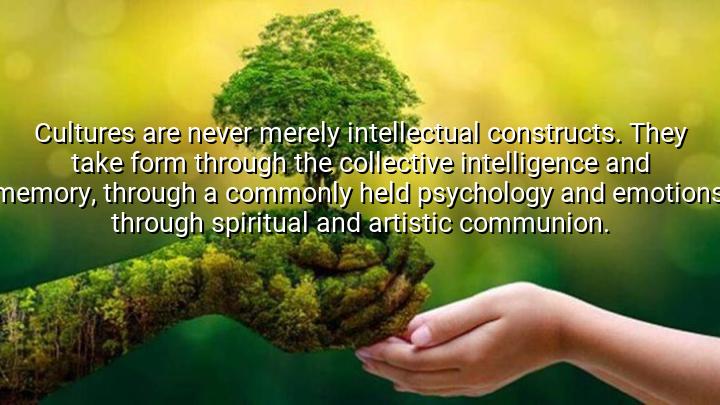




The quote "Cultures are never merely intellectual constructs. They take form through the collective intelligence and memory, through a commonly held psychology and emotions, through spiritual and artistic communion." by Tariq Ramadan reflects his perspective on the multifaceted nature of culture. Ramadan, a prominent scholar and thinker, emphasizes that culture is not just an abstract or theoretical idea that exists solely in intellectual discussion. Instead, it is deeply embedded in the collective intelligence, memory, and shared experiences of a community. Culture, in Ramadan's view, is shaped by the way people think, feel, and relate to one another.
Ramadan highlights that culture is formed through psychology and emotions, which reflect the emotional and mental states of a group over time. These shared emotional experiences contribute to a common identity and a sense of belonging within a community. In this way, culture is not just a set of ideas but is woven into the very fabric of people's daily lives, influencing how they perceive the world and interact with each other.
The reference to spiritual and artistic communion points to the role of spirituality and art in culture. These elements, whether through religion, ritual, or creative expression, help bind people together in ways that go beyond intellectual understanding. Artistic communion implies that culture is also built through collective creative expression, whether it’s through music, literature, or visual arts. These communal experiences bring people closer, giving them a shared language and understanding of their identity and heritage.
Ultimately, Ramadan’s quote emphasizes that culture is a dynamic, living force that is shaped by a combination of intellectual, emotional, and spiritual elements. It is not confined to academic or theoretical constructs but is something that evolves through shared experiences and communal bonds, making it a vital, ongoing process that reflects the depth of human connection.

AAdministratorAdministrator
Welcome, honored guests. Please leave a comment, we will respond soon