

Communities of color, like the South Bronx, have long been exposed to elevated levels of air pollution that gravely impact all aspects of our health: physical, mental, and emotional.
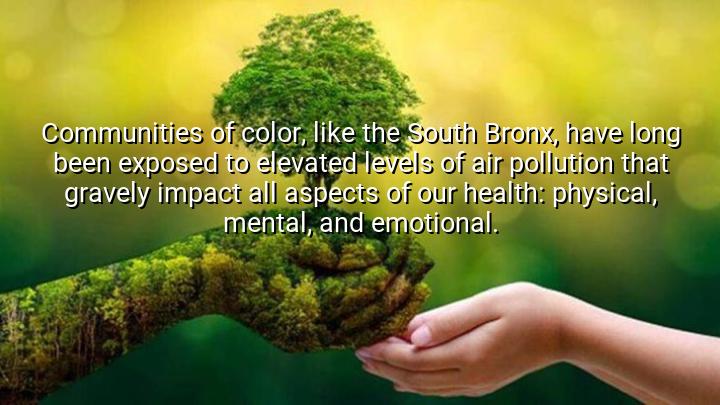




Ritchie Torres’s quote addresses the disproportionate exposure of communities of color, particularly in areas like the South Bronx, to elevated levels of air pollution. He highlights how this environmental issue affects not only the physical health of residents but also their mental and emotional well-being. The quote underscores that pollution is not just a physical burden but a multidimensional problem that can have lasting consequences on various aspects of health, making it a social justice issue as well.
Torres emphasizes that the negative effects of air pollution are long-standing and deeply ingrained in these communities, reflecting systemic environmental racism. Communities like the South Bronx, often marginalized and underrepresented, have been historically exposed to higher levels of pollutants, which disproportionately affect their health outcomes. This suggests a direct link between environmental conditions and socioeconomic status, as these communities often lack the resources to combat or escape from these toxic environments.
By pointing out the impact on mental and emotional health, Torres expands the conversation beyond just physical ailments like respiratory issues or cardiovascular diseases. He acknowledges that the stress and anxiety caused by living in such polluted conditions can take a significant toll on residents' overall well-being, leading to long-term emotional and psychological challenges. This broader view of health emphasizes the need for comprehensive solutions that address not only physical but also mental health disparities.
Originating from Torres’s work as a politician and advocate for social justice, this quote reflects his focus on the intersection of environmental and health inequities. Torres has long been an advocate for addressing these systemic issues, particularly in low-income, minority communities, and this quote serves as a call to action for policymakers to address both environmental and health injustices that affect these vulnerable populations.

AAdministratorAdministrator
Welcome, honored guests. Please leave a comment, we will respond soon