

Common sense is the measure of the possible; it is composed of experience and prevision; it is calculation applied to life.
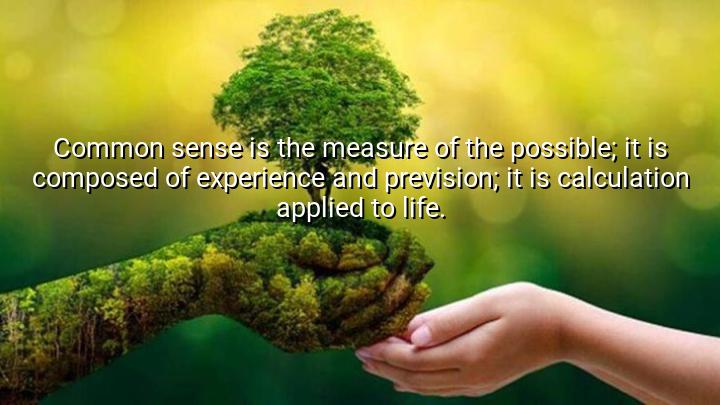




The quote "Common sense is the measure of the possible; it is composed of experience and prevision; it is calculation applied to life." by Henri Frederic Amiel emphasizes that common sense serves as a practical guide to what can be realistically achieved in life. Amiel, a Swiss philosopher and writer, suggests that common sense is grounded in experience—the lessons we learn from life—and prevision, or the ability to foresee and plan for the future. This combination allows individuals to make sensible decisions based on a realistic understanding of what is possible.
In this context, Amiel presents common sense not as mere intuition or simple thinking, but as a form of calculation. It requires a careful assessment of circumstances and the ability to apply both past experiences and foresight to navigate life effectively. By integrating both the past and the future, common sense becomes a practical tool for making sound decisions, avoiding unnecessary risks, and recognizing opportunities that align with reality.
The quote also highlights the rational and strategic nature of common sense. It implies that by combining rational thought with real-life experience, individuals can make choices that are more likely to lead to success and fulfillment. Amiel suggests that common sense transcends emotional or impulsive actions, relying instead on careful reasoning and a clear understanding of the world around us.
Ultimately, Henri Frederic Amiel’s perspective emphasizes that common sense is a critical life skill, shaped by both experience and prevision. It encourages people to apply logic and practical thinking to daily challenges, making decisions based on what is achievable and sensible rather than being swayed by idealistic or unrealistic notions.

AAdministratorAdministrator
Welcome, honored guests. Please leave a comment, we will respond soon