

Climate change is the central environmental ill of our time. We have an obligation to protect our children from the dangers of this widening scourge, and we aren't yet doing enough about it.
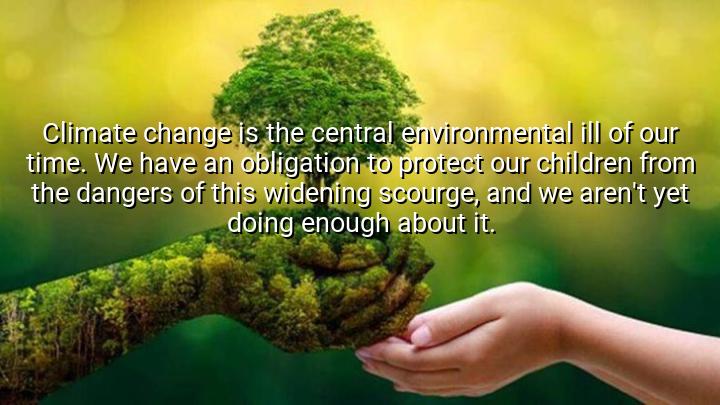




Frances Beinecke's quote emphasizes that climate change is the most urgent and critical environmental ill facing the world today. She argues that the consequences of climate change are widespread and rapidly increasing, making it the central environmental issue of our time. By calling it a "scourge," she highlights the severity and destructive nature of climate change, which affects ecosystems, economies, and communities across the globe.
Beinecke's statement also expresses a strong moral obligation to protect future generations, particularly children, from the dangers posed by climate change. She emphasizes the responsibility that current generations have in mitigating the effects of a crisis that will disproportionately impact the younger and future populations. The phrase "protect our children" reflects the long-term perspective needed when addressing climate issues, as the full consequences of today's actions will unfold over decades.
The quote further underscores the sense of urgency and disappointment that more has not been done to combat the crisis. Beinecke points out that, despite increasing awareness and scientific consensus, the response to climate change has been insufficient. She critiques the lack of comprehensive and immediate action to address the root causes of climate change, such as greenhouse gas emissions, deforestation, and fossil fuel dependency.
Ultimately, Beinecke’s statement calls for greater action and a shift in priorities to confront the climate crisis head-on. It reflects a call to governments, businesses, and individuals to recognize the full scale of the problem and work collectively to create sustainable solutions for the well-being of both current and future generations.

AAdministratorAdministrator
Welcome, honored guests. Please leave a comment, we will respond soon