

Climate change is an economic, public health, and environmental issue that we have a moral responsibility to address.
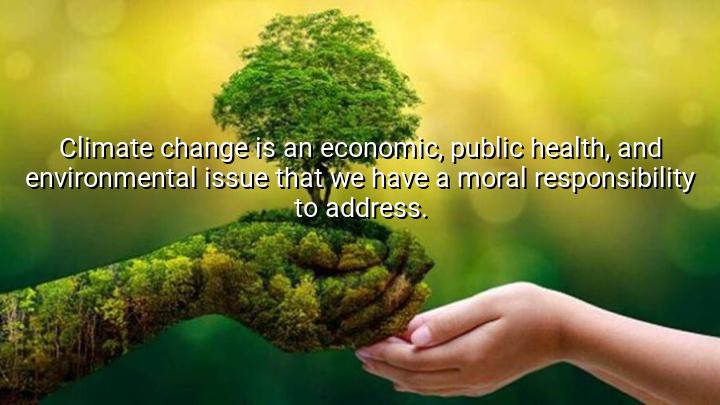




In this quote, Brad Schneider, a U.S. Congressman, underscores the multifaceted nature of climate change. He stresses that it is not only an environmental issue, but also an economic and public health issue that requires urgent action. By framing climate change in these three broad categories, Schneider highlights its far-reaching effects on society, impacting everything from the economy through the costs of natural disasters to the health of individuals affected by pollution and rising temperatures, and finally to the environment through habitat destruction and ecosystem changes.
Schneider's statement emphasizes that addressing climate change is not merely a matter of environmental conservation or regulation, but a broader moral responsibility. He implies that inaction or delay in addressing this crisis could have devastating consequences for future generations, particularly those who are most vulnerable to the effects of climate change, such as marginalized communities and low-income populations. This calls for a collective sense of duty to take responsible action, both for economic stability and human well-being.
The use of the term "moral responsibility" suggests that Schneider views climate change as a challenge that goes beyond politics or economics—it is a matter of ethics and justice. In his view, failing to take decisive steps to mitigate the impact of climate change would be a failure to meet our obligations to each other and to the planet. This statement is likely a call to lawmakers, businesses, and individuals alike to recognize the urgency of the climate crisis and act in a way that benefits both current and future generations.
The origin of this quote comes from Schneider's advocacy for climate action as part of his broader work in Congress. As a politician, he has been a strong proponent of environmental policies that seek to address climate change while also focusing on public health and economic stability. This statement encapsulates his view that climate change is a comprehensive issue requiring integrated solutions that address its economic, health, and environmental dimensions.

AAdministratorAdministrator
Welcome, honored guests. Please leave a comment, we will respond soon