

Civil disobedience is not accepted by religion and the state does not accept it and there are many verses in the Holy Book that talk of following the ruler.
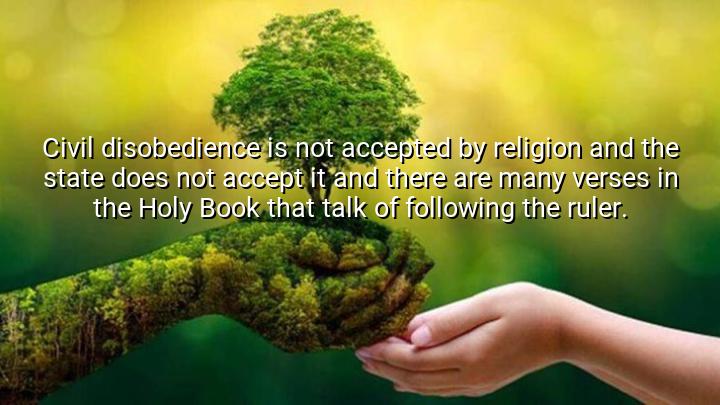




The quote by Pope Shenouda III, “Civil disobedience is not accepted by religion and the state does not accept it and there are many verses in the Holy Book that talk of following the ruler,” emphasizes the importance of order, authority, and obedience in both religion and society. Pope Shenouda III highlights that civil disobedience, or the deliberate refusal to follow laws or governmental rules, is generally discouraged because it can disrupt social harmony and conflict with religious teachings. The quote reflects a belief that stability and governance are crucial for maintaining a functioning community.
The origin of this quote comes from Pope Shenouda III, the late Coptic Orthodox Pope of Alexandria, who led the Coptic Church from 1971 to 2012. Known for his emphasis on spiritual discipline, religious teachings, and social responsibility, Pope Shenouda often guided followers on how to live in alignment with both faith and civic law. His statement reflects his perspective on the balance between religious obedience and civic duty, highlighting that one should respect the authority of rulers as outlined in religious texts.
At its core, the quote underscores the idea that faith and governance are intertwined. By referencing the Holy Book and its verses about following rulers, Pope Shenouda III conveys that religious teachings often support lawfulness and order, and that defiance against authority should be approached with caution. The message encourages discernment, respect for laws, and spiritual reflection before engaging in acts of civil disobedience.
Ultimately, Pope Shenouda III’s statement serves as guidance for maintaining social cohesion and moral responsibility. It encourages believers to recognize that while personal convictions are important, upholding societal rules and following religious principles regarding authority are essential for a stable and peaceful community. The quote blends religious wisdom with practical advice on civic life.

AAdministratorAdministrator
Welcome, honored guests. Please leave a comment, we will respond soon