

Cinema sustains life. It captures death in its progress.
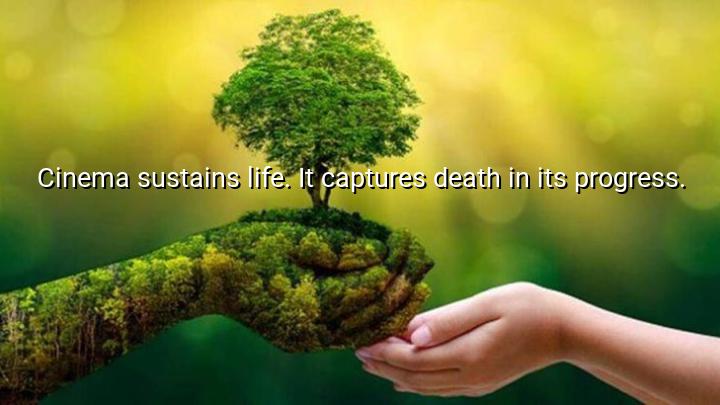




The quote "Cinema sustains life. It captures death in its progress" by Harmony Korine reflects the profound role that film plays in both preserving life and confronting its inevitable end. Korine suggests that cinema is not just a form of entertainment but a powerful medium that captures the essence of life and its fleeting nature. Through visual storytelling, films give us the ability to revisit moments, freeze time, and experience different aspects of the human condition, including death, in a way that is emotionally resonant and thought-provoking.
Korine’s words also point to the way cinema serves as a record of human existence, preserving stories, experiences, and emotions that may otherwise be lost over time. Films document life’s transience—highlighting the ephemeral nature of human experiences while also offering a sense of immortality through their ongoing presence. In this sense, cinema becomes a reflection of our shared humanity, capturing moments that speak to the universal reality of life and death.
The phrase "it captures death in its progress" specifically suggests that cinema has the unique ability to illustrate not just the end of life, but also the process by which death is intertwined with life. Filmmakers often explore themes of mortality, loss, and the passage of time, showing how death shapes and influences the lives of their characters. In this way, cinema becomes a way to process death and its impact on the living.
Ultimately, Korine’s quote reveals the transformative power of cinema—how it can both sustain life by keeping memories and stories alive, and also confront the harsh reality of death in its depiction. Through the lens of a camera, life and death are continuously in dialogue, making cinema a vital part of how we understand and navigate the world.

AAdministratorAdministrator
Welcome, honored guests. Please leave a comment, we will respond soon