

Chaos often breeds life, when order breeds habit.
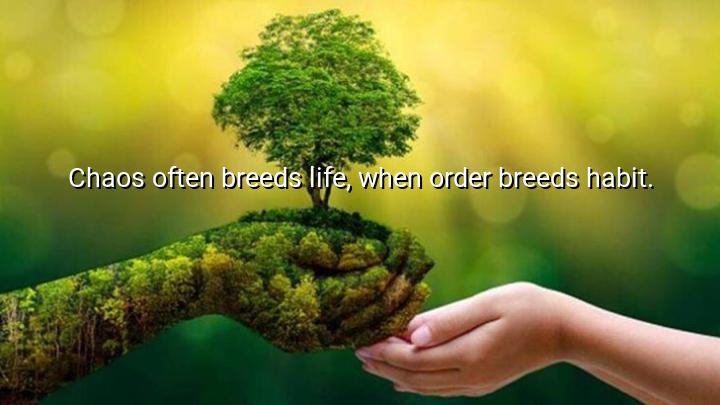




The quote by Henry Adams, "Chaos often breeds life, when order breeds habit," reflects his view on the relationship between chaos and order in the process of growth and transformation. Adams, an American historian and writer, suggests that chaos—often seen as disruptive or destructive—can spark creativity, innovation, and new beginnings, leading to the birth of something fresh or unexpected. In contrast, order can create a sense of routine and stagnation, where things become predictable and fixed, rather than evolving or adapting.
Adams’ quote highlights the dynamic nature of change. He proposes that when things are in a state of chaos, there is room for new ideas and possibilities to emerge, as individuals or societies are forced to think outside the box and adapt. In this sense, chaos can be a catalyst for progress and revolution, pushing people to innovate in ways they wouldn’t in a more structured, controlled environment. Order, on the other hand, can lead to the comfort of routine and tradition, which may limit growth and creativity.
This idea also speaks to the balance between structure and freedom in life and work. While order can bring stability and efficiency, it can also result in complacency or repetitive behavior, making it harder to break free from established patterns. Chaos, though often uncomfortable, challenges the status quo and offers opportunities for fresh perspectives and actions. Adams seems to suggest that life—in its truest form—thrives in the tension between these forces, with chaos providing the energy for growth and order offering the structure to sustain it.
Ultimately, Adams’ quote encourages us to embrace disruption and change as forces that can lead to new opportunities and progress, while also recognizing that too much order can limit potential. It’s a reflection on the need for both stability and spontaneity in order to foster true creativity and innovation.

AAdministratorAdministrator
Welcome, honored guests. Please leave a comment, we will respond soon