

Certainly people make mistakes in their life. I'm no different, I've made mistakes. When people mess up, we forgive them. When I mess up, I ask for forgiveness.
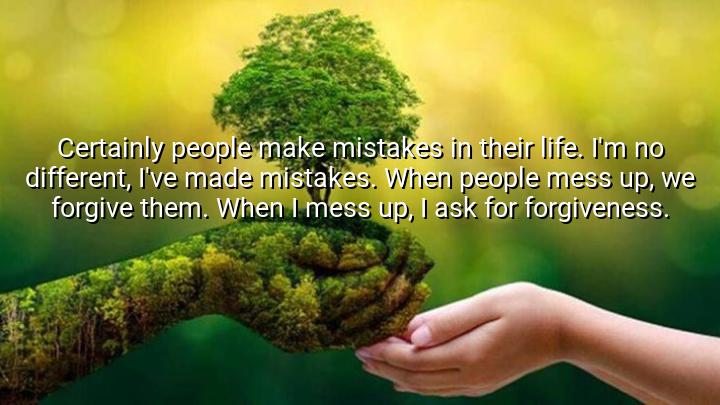




Michele Bachmann’s quote, "Certainly people make mistakes in their life. I'm no different, I've made mistakes. When people mess up, we forgive them. When I mess up, I ask for forgiveness," emphasizes the universality of making mistakes and the importance of forgiveness in human relationships. Bachmann acknowledges that, like everyone else, she has made mistakes in her life. She stresses the idea that when others make errors, they deserve forgiveness, and similarly, when she errs, she takes the step of seeking forgiveness herself. The quote highlights the reciprocal nature of grace—offering forgiveness to others while being willing to ask for it when necessary.
The quote reflects a sense of humility, as Bachmann openly admits her imperfections and the need for personal accountability. She recognizes that mistakes are a natural part of life, and that forgiveness is essential for moving forward. Rather than just focusing on the wrongdoing, she calls attention to the process of repentance and the importance of acknowledging one’s own failures, which is key to healing and restoring relationships.
The origin of this perspective is rooted in Bachmann’s Christian faith, which often emphasizes forgiveness and the need for both grace and accountability in one's life. As a political figure, Bachmann has faced public scrutiny, and her statement reflects a personal approach to dealing with criticism and mistakes—by humbling herself and asking for forgiveness when necessary. It’s a call to not only forgive others but to be willing to seek reconciliation when we are in the wrong.
Ultimately, Bachmann’s quote serves as a reminder that forgiveness is not just about granting it to others, but also about having the courage to ask for it when we fall short. The quote encourages personal growth, accountability, and the recognition that no one is perfect. Through forgiveness—both given and received—we can restore and strengthen our relationships with others.

AAdministratorAdministrator
Welcome, honored guests. Please leave a comment, we will respond soon