

Can you really forgive if you can't forget?
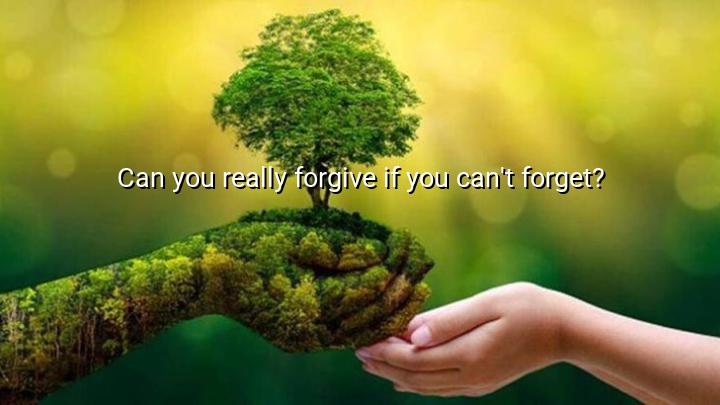




In this quote, Sarah Jessica Parker raises a profound question about the relationship between forgiveness and forgetting. She suggests that true forgiveness may require not just the act of letting go of anger or resentment but also the ability to move past the memories of a wrong. The question implies that if one cannot forget the hurt or betrayal, it becomes difficult to fully forgive, because the past continues to influence one's feelings and interactions with the person who caused the harm.
Parker’s statement explores the emotional complexity of forgiveness, acknowledging that while it is often easy to say we forgive someone, it is much more difficult to fully release the pain and the memories of the offense. If we continue to remember the wrong and hold onto it, then perhaps we haven’t truly forgiven—it’s as though the hurt is still lingering and affecting our ability to heal. This reflects a deeper truth that emotional healing involves both mental and emotional work to truly release the past.
The quote also touches on the idea of closure. To forgive and forget might be seen as achieving emotional peace—when we can genuinely let go of the past and no longer allow it to control our present emotions. If forgetting is impossible, it suggests that we may never fully heal, as the memory of the wrong will keep us bound to it. This perspective challenges the idea that forgiveness is only about absolving someone else and argues that self-healing is also a necessary part of the process.
Ultimately, Sarah Jessica Parker’s quote invites reflection on the nature of forgiveness and whether it can truly exist without forgetting. It highlights the difficulty of reconciling the past with the desire for emotional freedom and peace, and it asks whether true forgiveness can only be achieved when the painful memories no longer affect us.

AAdministratorAdministrator
Welcome, honored guests. Please leave a comment, we will respond soon