

By training and keeping doctors in underserved areas, we're working toward a goal of increasing access to quality health care for more of our communities.
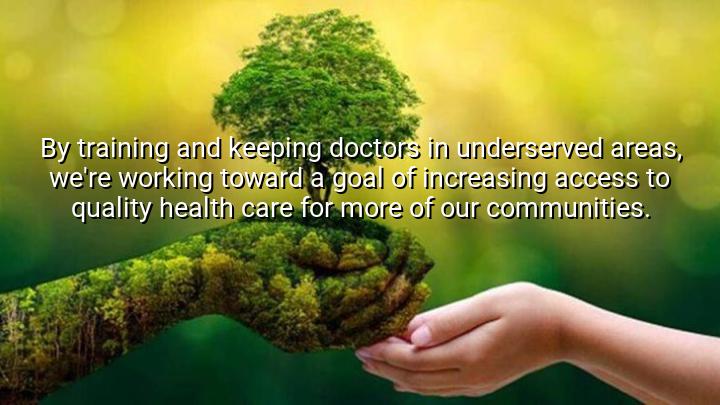




In this quote, Chris Gibson emphasizes the importance of training and retaining doctors in underserved areas to improve access to quality health care. He suggests that by focusing on ensuring that medical professionals are available in areas that lack sufficient healthcare resources, we can work toward a broader, more inclusive goal of providing better healthcare to all communities. The statement underscores the importance of addressing healthcare disparities by ensuring that people in rural or economically disadvantaged areas receive the same level of care as those in more affluent regions.
Gibson’s comment highlights a key strategy in addressing the healthcare crisis in the United States: targeting healthcare resources where they are most needed. By focusing on underserved areas, where medical professionals are often scarce, we can make a significant difference in the overall health and well-being of communities. This approach not only benefits individuals in those areas but also helps create a more equitable healthcare system.
The origin of this quote comes from Chris Gibson, a former U.S. Congressman and military officer known for his work on various public policy issues, including healthcare. As someone who has seen the challenges of accessing care in rural areas, Gibson advocates for systemic changes to ensure that healthcare is accessible to all, particularly in regions where it is most lacking. His efforts reflect his belief that addressing healthcare access in underserved communities is a key step in improving the nation’s overall health.
Ultimately, Gibson’s quote underscores the importance of focusing on healthcare equity and improving the distribution of healthcare resources. By ensuring that doctors are trained and remain in underserved areas, we can reduce healthcare disparities and increase access to quality care for all. This approach is essential for building a more inclusive and effective healthcare system.

AAdministratorAdministrator
Welcome, honored guests. Please leave a comment, we will respond soon