

By three methods we may learn wisdom: First, by reflection, which is noblest; Second, by imitation, which is easiest; and third by experience, which is the bitterest.
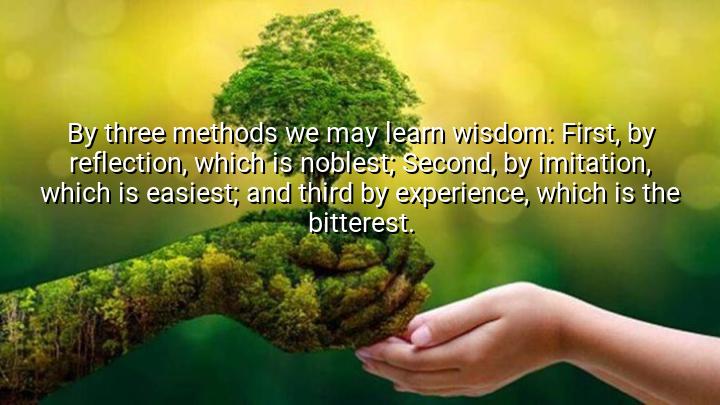




Certainly! Here’s an explanation of the quote by Confucius with bolded keywords:
This quote outlines three distinct methods through which one can acquire wisdom. Confucius identifies reflection as the noblest method, emphasizing the power of thoughtful contemplation and self-examination. Through reflection, individuals engage deeply with their thoughts and ideas, leading to profound understanding without necessarily relying on external events.
The second method, imitation, is described as the easiest way to learn wisdom. By observing and copying the behavior of others—especially those who are wise or virtuous—people can adopt valuable lessons quickly and with less struggle. However, this method may lack the depth that comes from personal insight or direct experience.
Finally, Confucius points out that experience is the bitterest teacher. Gaining wisdom through experience often involves making mistakes or facing hardships, which can be painful but ultimately leads to the most lasting and authentic understanding. This highlights the challenging but essential role of personal trials in growth.
The origin of this quote comes from Confucius, the ancient Chinese philosopher whose teachings have profoundly influenced Eastern thought. His words encourage a balanced approach to learning, valuing both introspection and practical engagement with the world.
Would you like me to include historical context about Confucius or relate it to modern learning?

AAdministratorAdministrator
Welcome, honored guests. Please leave a comment, we will respond soon