

But if we keep doing politics the way we're doing politics, and we keep doing climate action the way we're doing climate action, we will not have a history that judges us because we, certainly as a civilization, won't be here.
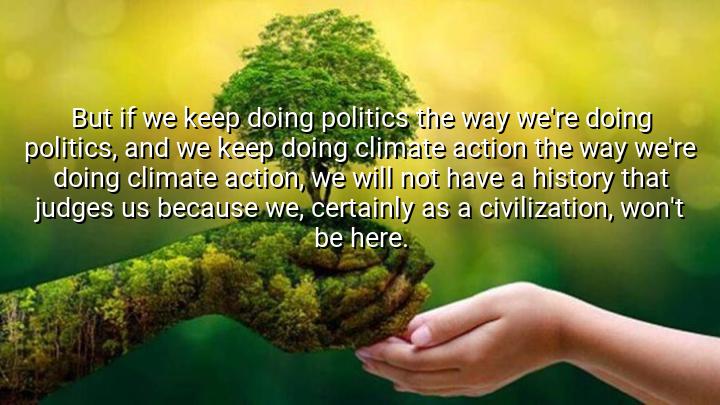




Elizabeth May’s quote, "But if we keep doing politics the way we're doing politics, and we keep doing climate action the way we're doing climate action, we will not have a history that judges us because we, certainly as a civilization, won't be here," emphasizes the urgent need for change in both politics and climate action. May warns that if society continues on its current path—where political systems and climate initiatives remain ineffective or insufficient—we risk the survival of humanity itself. The quote is a call to reevaluate and radically improve how both politics and climate action are handled to ensure that future generations will not look back on our time as one where nothing meaningful was done to prevent catastrophe.
The phrase "we will not have a history that judges us" suggests that, without serious changes, future generations will not view us favorably. They may not even exist to pass judgment if the current trends in climate action and politics lead to irreversible environmental damage. May underscores that the legacy of our civilization will not be one of progress and solutions, but rather one of failure to act when it mattered most.
Originating from May’s work as a Canadian environmentalist and political leader, the quote speaks to her deep concern for the future of climate action and how it intersects with political leadership. As the leader of the Green Party of Canada, May has been a strong advocate for urgent, decisive measures to combat climate change. Her quote reflects her belief that the current political approach to climate change is inadequate to the scale of the crisis.
The quote serves as a dire warning that unless there is a shift in both politics and the way we address climate action, the very future of humanity is at risk. May challenges those in power to step up and make real changes, urging a political will that is as strong as the environmental challenges facing the world. It’s a call to action for leaders to rethink their approach before it is too late.

AAdministratorAdministrator
Welcome, honored guests. Please leave a comment, we will respond soon