

Biofuels such as ethanol require enormous amounts of cropland and end up displacing either food crops or natural wilderness, neither of which is good.
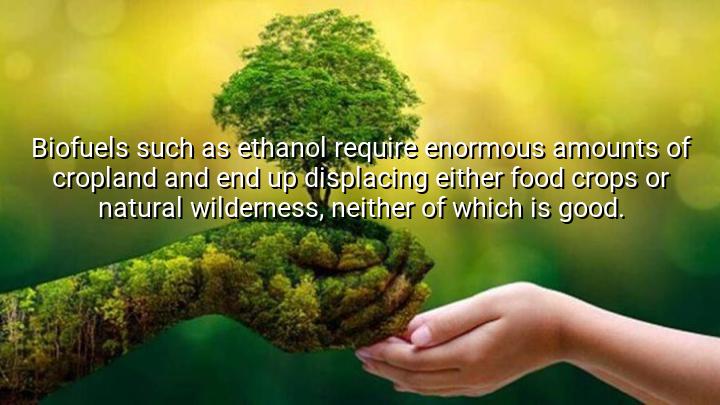




The quote, "Biofuels such as ethanol require enormous amounts of cropland and end up displacing either food crops or natural wilderness, neither of which is good," by Elon Musk, reflects his critique of biofuels like ethanol as a sustainable energy source. Musk, a well-known advocate for renewable energy through companies like Tesla and SpaceX, points out that while biofuels are often promoted as an environmentally friendly alternative to fossil fuels, they come with significant environmental and societal costs. The production of biofuels requires large amounts of cropland, which can lead to the displacement of food crops or natural wilderness, both of which have important ecological and human value.
Musk’s statement raises concerns about the land use required for biofuel production, which may take away from land that could be used for growing food or preserving biodiversity. The need for large-scale agricultural production to meet the demand for biofuels can lead to deforestation and the destruction of natural habitats, ultimately exacerbating issues like climate change and species loss. This trade-off highlights a fundamental flaw in the idea that biofuels are a one-size-fits-all solution to energy problems.
The quote also speaks to Musk’s broader philosophy that sustainable energy solutions should not have negative unintended consequences. While biofuels can help reduce dependence on fossil fuels, Musk argues that they are not a perfect solution because they contribute to environmental degradation in other areas, such as food security and land conservation. In his view, the ideal energy sources would be those that have minimal impact on natural resources and food systems.
Ultimately, Musk's words advocate for innovative, cleaner energy solutions that do not come at the expense of essential resources like food and biodiversity. His cautionary view of biofuels serves as a reminder that while alternative energy is necessary for reducing carbon emissions, the methods we choose must also be sustainable in the broader sense of not harming other vital aspects of the environment.

AAdministratorAdministrator
Welcome, honored guests. Please leave a comment, we will respond soon