

An intellectual is someone whose mind watches itself.
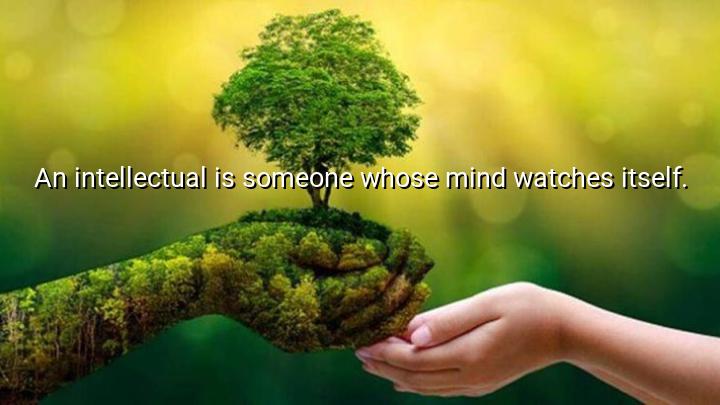




The quote "An intellectual is someone whose mind watches itself" by Albert Camus reflects on the nature of self-awareness and critical thinking. Camus is suggesting that an intellectual does not simply think passively or reactively; instead, they engage in a deeper level of reflection, constantly observing their own thoughts and the process behind them. This self-monitoring allows intellectuals to question their own assumptions, challenge their ideas, and better understand the nature of their beliefs. The intellectual's mind is active not only in generating ideas but also in evaluating and analyzing the mental processes that lead to those ideas.
Camus' statement emphasizes the importance of metacognition—the ability to think about one's own thinking. The intellectual is not just concerned with external knowledge or information, but also with how their own mind works, how it processes information, and how it arrives at conclusions. This level of awareness helps intellectuals to remain critical of their own biases and errors, ensuring their thought processes are as rational and objective as possible.
The origin of this quote lies in Camus' broader philosophical views on existence, consciousness, and absurdism. Known for his works like The Stranger and The Myth of Sisyphus, Camus often explored the complexities of human consciousness and the struggle to find meaning in a seemingly meaningless world. This quote reflects his belief in the importance of self-examination and the constant questioning of our ideas in order to better understand the world and ourselves.
Ultimately, Camus' quote encourages us to cultivate self-awareness in our own thinking. It suggests that true intellectual engagement goes beyond simply acquiring knowledge; it involves constantly reflecting on how we think, what influences our thoughts, and how we can improve our reasoning. This process of self-observation not only enhances our intellectual growth but also leads to greater clarity and insight into the human experience.

AAdministratorAdministrator
Welcome, honored guests. Please leave a comment, we will respond soon