

An institution or reform movement that is not selfish, must originate in the recognition of some evil that is adding to the sum of human suffering, or diminishing the sum of happiness.
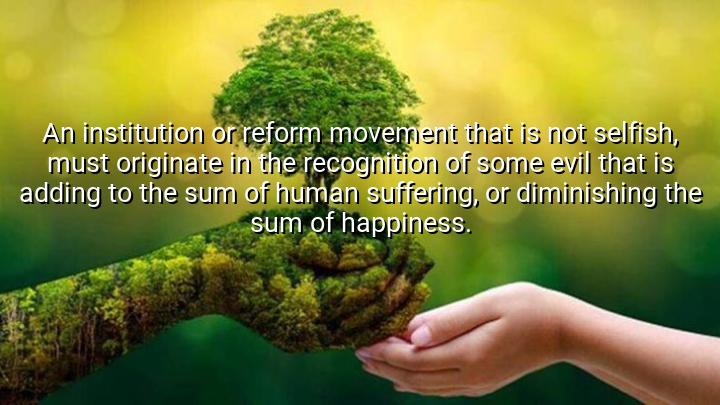




In this quote, Clara Barton asserts that for an institution or reform movement to be truly effective and selfless, it must arise from the recognition of an evil or injustice that is contributing to human suffering or reducing the overall happiness in society. Barton suggests that the motivation behind such movements should be rooted in a desire to alleviate harm or improve conditions, rather than personal gain. This view stresses the importance of compassion and empathy as the driving forces for social change.
Barton’s statement underscores the idea that effective reforms must be focused on addressing real issues that cause harm, rather than superficial or self-serving goals. The recognition of suffering or the diminishment of happiness acts as a catalyst for action, urging individuals or groups to work toward creating a better and more just society. In this context, a movement driven by selflessness is one that seeks to improve the well-being of others and address societal flaws, not merely to advance the interests of a few.
The origin of this quote is linked to Barton’s life as a nurse and humanitarian who founded the American Red Cross. Her work during the Civil War and her efforts in disaster relief reflected her deep commitment to alleviating human suffering and improving the lives of others. This quote reflects her belief that true reform is motivated by a sincere desire to address injustice and to increase human happiness through service and compassion.
Ultimately, Barton’s quote challenges the idea of self-interest in reform, emphasizing that the most powerful movements are those rooted in the desire to fight against injustice and suffering. It highlights the idea that meaningful change comes from recognizing and addressing the real issues affecting people’s lives, particularly those that cause harm or hinder their well-being.

AAdministratorAdministrator
Welcome, honored guests. Please leave a comment, we will respond soon