

All of imagination - everything that we think, we feel, we sense - comes through the human brain. And once we create new patterns in this brain, once we shape the brain in a new way, it never returns to its original shape.
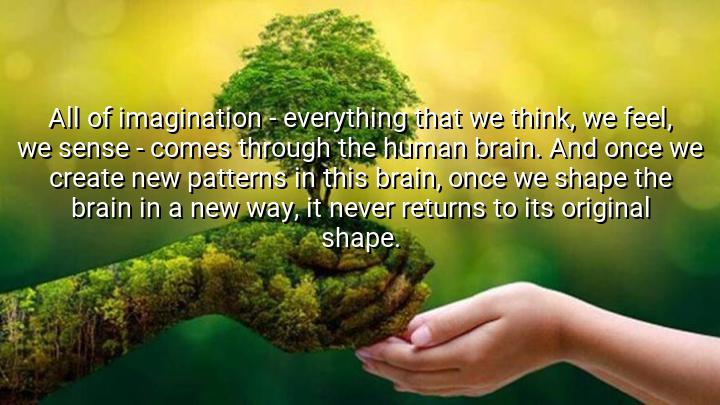




In the quote "All of imagination - everything that we think, we feel, we sense - comes through the human brain. And once we create new patterns in this brain, once we shape the brain in a new way, it never returns to its original shape," Jay S. Walker highlights the profound connection between the brain and imagination. He suggests that all human experience—thoughts, feelings, and sensory perceptions—are filtered and processed through the brain, which serves as the central hub of creativity. The quote emphasizes that the brain is not a static organ; it is shaped and transformed by new experiences and patterns of thinking, which can have lasting effects on how we perceive and interact with the world.
Walker, an entrepreneur and inventor, is drawing attention to the plasticity of the brain, the idea that it is constantly evolving in response to new ideas and experiences. This notion of the brain's adaptability and malleability has been supported by neuroscience, which shows that our neural connections can be rewired over time as we learn and engage with the world. According to Walker, when we engage our imagination and challenge our existing ways of thinking, we create new patterns that permanently alter the brain's structure and function.
The statement that the brain "never returns to its original shape" underscores the irreversible nature of these changes. Every new idea, thought, or experience leaves an imprint on the brain, shaping it in a way that influences future cognitive processes. This concept suggests that creativity, learning, and even the simple act of engaging with new information has the power to continuously reshape our mental and emotional landscape.
Ultimately, Walker’s quote underscores the transformative power of imagination and the brain’s capacity to evolve. By actively engaging with new ideas, we not only expand our creative potential but also shape the very way we think, feel, and experience the world. This reinforces the importance of fostering creativity and being open to new perspectives, as these experiences leave lasting, positive changes on the brain and, by extension, our lives.

AAdministratorAdministrator
Welcome, honored guests. Please leave a comment, we will respond soon