

All I know about thermal pollution is that if we continue our present rate of growth in electrical energy consumption it will simply take, by the year 2000, all our freshwater streams to cool the generators and reactors.
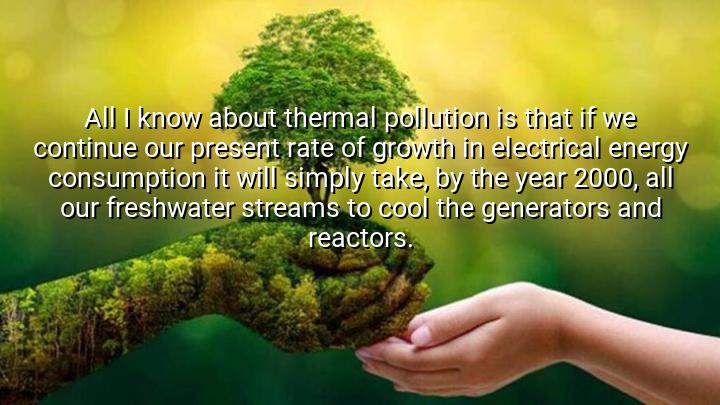




In this quote, David R. Brower, an environmentalist and former executive director of the Sierra Club, highlights the issue of thermal pollution and its potential long-term effects on the environment. Brower is concerned about the rate of growth in electrical energy consumption and its connection to the overheating of water used in power plants to cool generators and reactors. He predicts that, by the year 2000, if this growth continues, it will require all freshwater streams to serve this purpose, leading to environmental damage and depletion of vital natural resources.
Brower's statement emphasizes the concept of thermal pollution, which occurs when heated water from power plants is discharged into rivers and lakes, raising their temperature and disrupting local ecosystems. This kind of pollution can harm aquatic life by decreasing oxygen levels and altering the habitat. Brower uses this specific issue to underline a broader environmental concern: the unsustainable use of natural resources in the face of rising demand for energy.
The quote reflects Brower’s deep concern about the unsustainable nature of current energy practices. His prediction underscores the consequences of prioritizing growth in energy consumption without considering the environmental impact. Brower is warning that unchecked industrial growth could lead to the depletion of freshwater resources, which are essential not only for energy production but also for human consumption and ecosystems.
Ultimately, Brower’s statement calls for responsible energy practices and an awareness of how our increasing demand for energy can have far-reaching consequences on the environment. He urges for a more balanced and sustainable approach to energy production, one that considers the health of the planet as well as human needs.

AAdministratorAdministrator
Welcome, honored guests. Please leave a comment, we will respond soon