

All History is current; all injustice continues on some level, somewhere in the world.
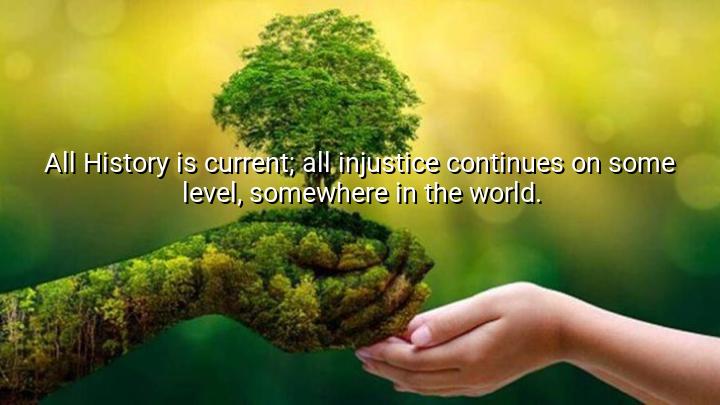




Alice Walker’s quote, “All History is current; all injustice continues on some level, somewhere in the world,” highlights the ongoing relevance of the past in shaping the present. She emphasizes that history is not a closed chapter but a living force, with its struggles, traumas, and lessons echoing into today. What has happened before continues to affect societies, cultures, and individuals, making history inseparable from current realities.
The meaning of this statement lies in Walker’s insistence that injustice is never fully confined to the past. Even if certain battles seem won, their roots persist—whether through systemic inequality, discrimination, or oppression that resurfaces in new forms. By saying all history is current, she reminds us that to ignore or forget injustices of the past is to allow them to survive and reappear in the present.
The origin of this idea connects to Walker’s broader work as a writer and activist. Known for her Pulitzer Prize-winning novel The Color Purple, she has consistently addressed issues of race, gender, and social justice, linking personal narratives with broader historical struggles. Her statement reflects her belief that art, storytelling, and awareness are essential in confronting not only past injustices but also their lingering effects in contemporary society.
Ultimately, this quote underscores a call for vigilance and empathy. If injustice continues “somewhere in the world,” then each generation has the responsibility to recognize its presence and work against it. Walker’s words remind us that history is not just a record—it is an active force that demands awareness, reflection, and action in the pursuit of justice.

AAdministratorAdministrator
Welcome, honored guests. Please leave a comment, we will respond soon