

All happiness or unhappiness solely depends upon the quality of the object to which we are attached by love.
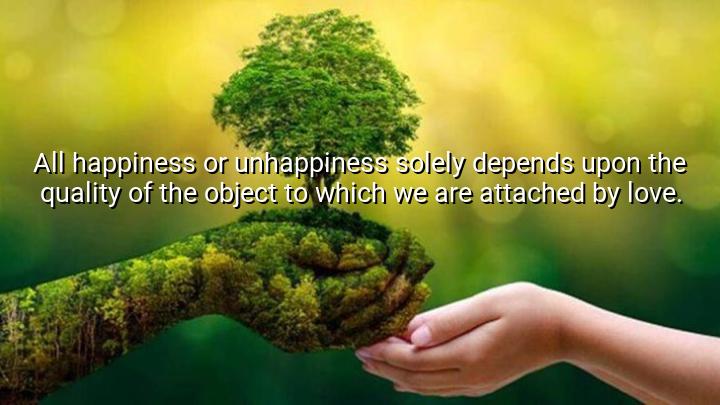




In this quote, Baruch Spinoza suggests that the level of our happiness or unhappiness is directly tied to the quality of the things or people we are attached to through love. Spinoza implies that love, as a powerful emotional force, shapes our experiences of joy or sorrow depending on what or who we attach ourselves to. If we place our love on positive, fulfilling, and virtuous things, our happiness will flourish. On the other hand, if we attach our love to unhealthy, toxic, or fleeting objects or relationships, our unhappiness will follow.
Spinoza’s view highlights that emotions such as happiness or unhappiness are not external events but arise from our internal attachments. The things or people we love have the power to influence our mental and emotional well-being. By recognizing the importance of the object of our love, we can make more conscious choices about where to direct our emotional energy. This places responsibility on the individual to ensure their attachments are worthy of their time, effort, and affection.
The quote also reflects Spinoza's broader philosophical perspective that our emotions are not irrational forces, but are shaped by the objects to which we become attached. In his view, cultivating rational love—directed toward things that align with our higher values—leads to greater contentment and peace. On the contrary, when we direct love toward things that are transient or superficial, it results in emotional instability.
Ultimately, Spinoza’s quote serves as a reminder to carefully consider the objects of our love and their impact on our emotional well-being. Our happiness or unhappiness is not just a matter of circumstance but largely depends on how wisely we invest our love and affection in people, pursuits, and ideals that promote inner peace and fulfillment.

AAdministratorAdministrator
Welcome, honored guests. Please leave a comment, we will respond soon