

All are agreed, that the increase of learning and good morals are great blessings to society.
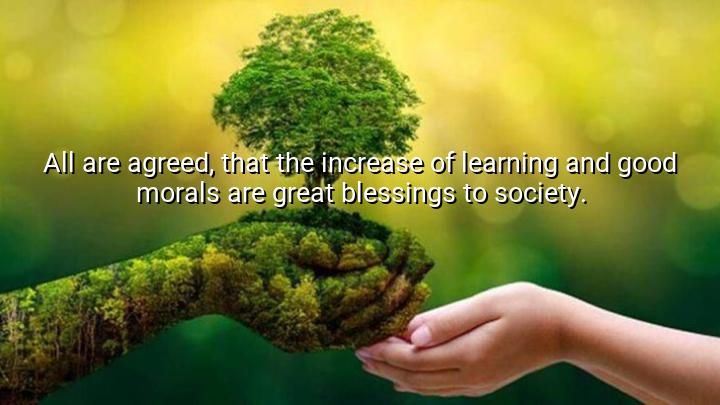




Joseph Lancaster’s quote highlights the widespread agreement on the value of both learning and good morals in contributing to the well-being of society. He emphasizes that the advancement of education (learning) and the cultivation of ethical values (good morals) are crucial to creating a positive and harmonious community. Lancaster suggests that these two elements are foundational for a prosperous and functioning society, shaping individuals who are not only knowledgeable but also ethically grounded.
The connection between learning and good morals implies that education should go beyond academic achievement and encompass the development of moral and ethical character. Lancaster likely believes that a well-rounded education is one that nurtures both intellectual and moral growth, helping individuals become not just skilled professionals but also responsible citizens. This view aligns with the educational philosophy of the 19th century, which often saw schooling as a means to shape character as much as it did to impart knowledge.
Lancaster, a pioneering figure in education reform, is known for his work in promoting mass education, particularly through the Lancastrian system, which was a method of schooling that focused on making education more accessible to the poor. His emphasis on learning and morality in this quote reflects his belief that education should serve a greater social purpose, helping individuals contribute positively to society. For him, these two pillars—education and moral values—were inseparable in the creation of a better world.
Ultimately, the quote highlights a timeless ideal: that education and ethical behavior are essential for societal progress. By advocating for both, Lancaster calls for an integrated approach to human development that focuses on nurturing both the mind and the character, ensuring that individuals are well-equipped to contribute to the greater good of society.

AAdministratorAdministrator
Welcome, honored guests. Please leave a comment, we will respond soon