

Against eternal injustice, man must assert justice, and to protest against the universe of grief, he must create happiness.
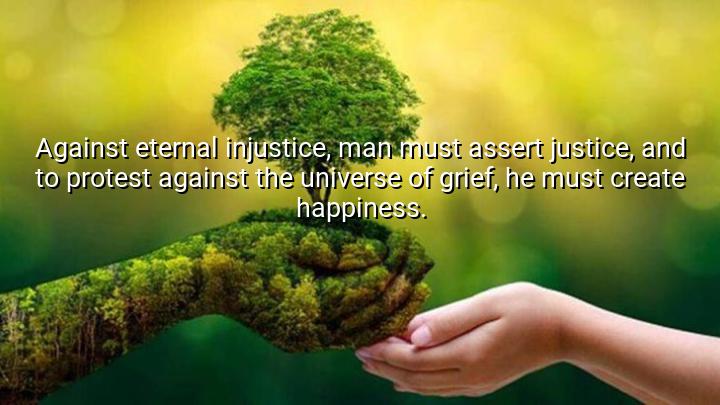




In this quote, Albert Camus addresses the inherent injustice and suffering in the world. He suggests that in the face of eternal injustice, it is the responsibility of man to actively assert justice. Camus reflects his existential philosophy, which emphasizes the need for individuals to create meaning and order in a world that often seems indifferent or even hostile to human concerns. In other words, humanity must respond to life's grief with action—by asserting justice and creating happiness.
The quote also touches on the idea of protest against the universe’s inherent suffering. Instead of passively accepting the universe as a place filled with sorrow and injustice, Camus calls for a conscious, active resistance. The protest against this bleak reality is not a rejection of life itself but an effort to impose human values of justice and joy onto it. By creating happiness, man defies the grief that permeates existence, reaffirming his freedom and agency.
Camus' perspective on happiness is not about simple pleasure or escapism; rather, it is the creation of meaningful experiences and responses to the world's challenges. In a universe that seems unfair and often cruel, Camus suggests that happiness becomes a form of rebellion—a refusal to let suffering define one's existence. It is about choosing to pursue meaning, even in the face of overwhelming odds.
At its core, this quote represents Camus' belief in the human spirit’s capacity to fight back against an indifferent or unjust world. By asserting justice and creating happiness, individuals can find a sense of purpose and empowerment, even amid adversity. It’s an affirmation of individual responsibility in the search for meaning in a world that can often feel lacking in it.

AAdministratorAdministrator
Welcome, honored guests. Please leave a comment, we will respond soon