

After two world wars, the collapse of fascism, nazism, communism and colonialism and the end of the cold war, humanity has entered a new phase of its history.
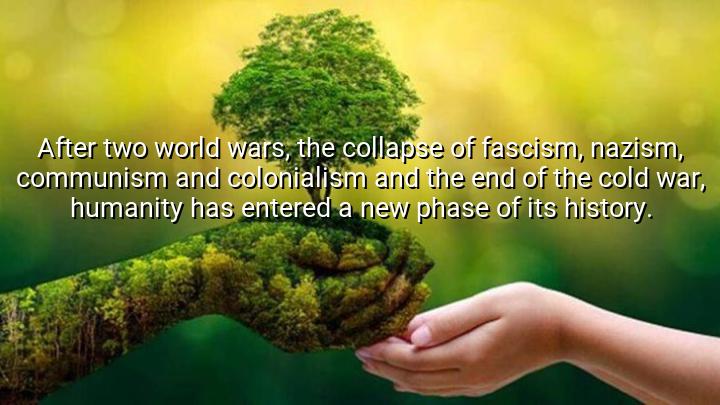




The quote "After two world wars, the collapse of fascism, nazism, communism, and colonialism and the end of the Cold War, humanity has entered a new phase of its history," by Hans Küng, reflects on the transformative events of the 20th century and their impact on global society. Küng is suggesting that the major ideological, political, and social upheavals of the past—such as the devastating world wars, the decline of totalitarian regimes, and the shifting power dynamics following the Cold War—have led humanity into a new era. This new phase is marked by the breakdown of old systems and the opportunity to build a different kind of global order.
Küng, a Swiss theologian and scholar of religion, often explored the intersections of history, politics, and religion. His statement highlights the dramatic changes that reshaped the world in the 20th century, especially the fall of powerful ideologies and regimes that had defined much of the modern era. The collapse of fascism, nazism, and communism, along with the end of the Cold War, signified a shift in the political landscape, ushering in a new era of globalization, democracy, and changing geopolitical relationships.
The origin of this quote can be traced to Küng’s broader analysis of world events and their implications for the future. As a thinker deeply concerned with human progress, religion, and global cooperation, he viewed the end of these major conflicts and ideological systems as a pivotal moment in history. This turning point, according to Küng, provided humanity with a fresh opportunity to rethink its future and move toward greater peace and understanding.
Ultimately, Küng’s quote serves as both a reflection on the profound changes of the 20th century and a call to action for the new era. It encourages us to recognize the progress made in overcoming destructive ideologies and to focus on building a better future based on the lessons learned from history. The new phase he refers to is one where the world can transcend old conflicts and move forward with a renewed sense of possibility and cooperation.

AAdministratorAdministrator
Welcome, honored guests. Please leave a comment, we will respond soon