

Absolute silence leads to sadness. It is the image of death.
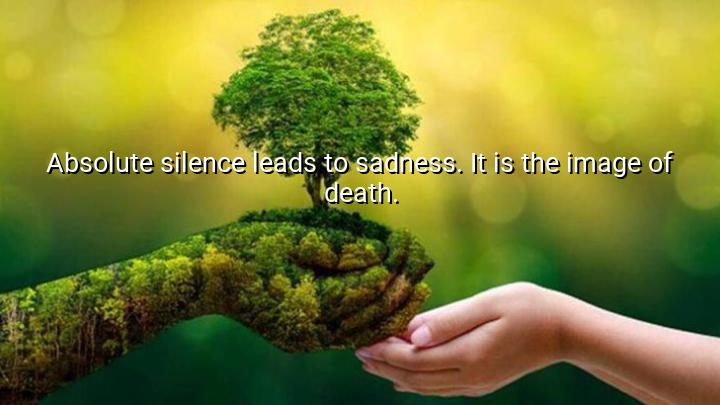




In this quote, Jean-Jacques Rousseau explores the emotional and existential implications of silence. He suggests that absolute silence—the complete absence of sound or communication—can evoke feelings of sadness and a deep sense of isolation. Silence, in Rousseau’s view, strips away the connections that typically bond individuals to one another, leading to a sense of emptiness. It creates a void where human interaction and expression are absent, which can weigh heavily on the human spirit.
Rousseau further deepens the impact of this silence by comparing it to death. He implies that silence, when prolonged and uninterrupted, can be seen as an image of death—a state of stillness and isolation that mirrors the finality and the absence of life. This comparison underscores the somber and perhaps unsettling effect of silence, which can be perceived not just as the lack of noise, but as a reminder of mortality and the end of existence.
The quote also hints at the human need for connection and communication. Rousseau was deeply concerned with the role of society and relationships in shaping the individual, and here he seems to suggest that silence, in its most extreme form, is detrimental to the human condition. Humans, he believed, thrive in environments where dialogue, expression, and emotional sharing occur, and the absence of these can lead to feelings of despair and disconnection.
Originating from Jean-Jacques Rousseau, a Swiss-born philosopher, writer, and composer, this quote reflects his broader philosophical inquiries into human nature, society, and individual emotion. Rousseau often examined how society and isolation shaped human behavior, and this quote captures his belief in the importance of communication and interaction in sustaining emotional and psychological well-being.

AAdministratorAdministrator
Welcome, honored guests. Please leave a comment, we will respond soon