

A test of what is real is that it is hard and rough. Joys are found in it, not pleasure. What is pleasant belongs to dreams.
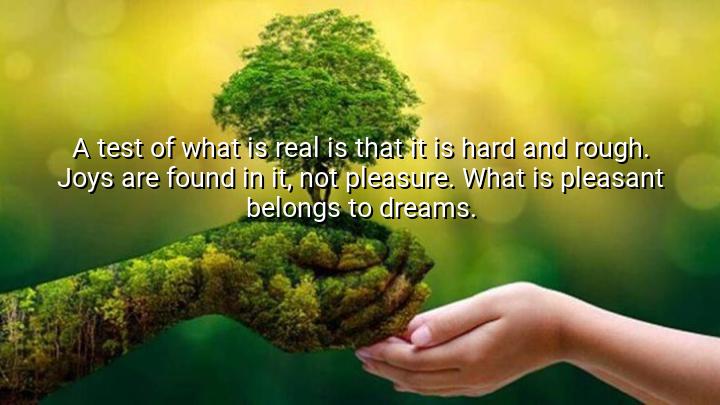




In this quote, Simone Weil presents a philosophical perspective on what is real versus what is illusory or derived from dreams. She argues that true reality is often hard and rough, suggesting that it can be challenging and filled with difficulties. Despite these hardships, joys are still found within it, indicating that real fulfillment comes not from ease or comfort, but from engaging with the complexity and struggles of life.
Weil contrasts this with pleasure, which she associates with dreams. Pleasure, in this sense, is transient and illusory, often linked to fleeting experiences or fantasies that do not offer lasting satisfaction. In her view, pleasure is something that is pleasant and comfortable, but it lacks the depth and substance of joy, which arises from facing the trials and realities of life head-on. This distinction highlights her belief that true meaning and growth come from enduring hardship, rather than seeking only comfort.
The origin of this quote comes from Simone Weil, a French philosopher and mystic known for her writings on religion, politics, and society. Weil's work often focused on the tension between the physical world and spiritual truth, and she was deeply concerned with the concept of suffering and how it relates to the human experience. Her writings, particularly on the nature of reality, reflect her conviction that true human flourishing comes not through the pursuit of easy pleasure, but through grappling with life's difficulties and finding deeper meaning in them.
In essence, Weil’s quote challenges the conventional pursuit of pleasure and instead advocates for embracing the hardness and roughness of reality. She suggests that joys found in the midst of struggle are more meaningful than the fleeting, surface-level pleasures that belong to the realm of dreams. This perspective encourages individuals to seek growth, resilience, and true satisfaction in the face of adversity.

AAdministratorAdministrator
Welcome, honored guests. Please leave a comment, we will respond soon