

A poet ought not to pick nature's pocket. Let him borrow, and so borrow as to repay by the very act of borrowing. Examine nature accurately, but write from recollection, and trust more to the imagination than the memory.
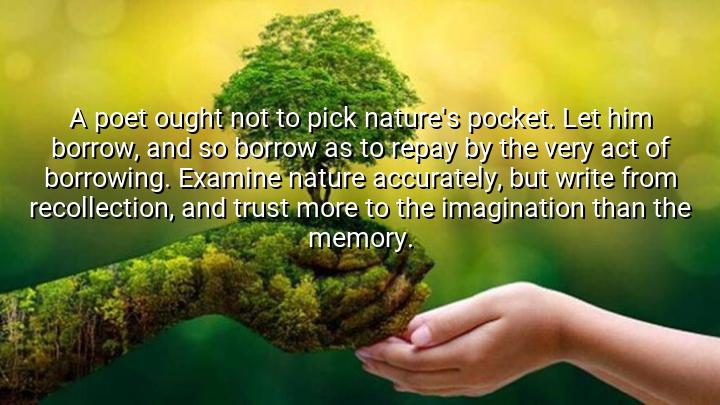




The quote "A poet ought not to pick nature's pocket. Let him borrow, and so borrow as to repay by the very act of borrowing. Examine nature accurately, but write from recollection, and trust more to the imagination than the memory" by Samuel Taylor Coleridge reflects his views on the relationship between poetry, nature, and the imagination. Coleridge, a key figure in the Romantic movement, suggests that a poet should not merely mimic or copy the world around them in a literal way. Instead, they should "borrow" from nature — meaning they should draw inspiration from the natural world but transform it through the imagination, turning it into something uniquely artistic.
Coleridge emphasizes that while a poet should examine nature accurately, the process of creating poetry should not be based solely on memory or direct observation. Instead, the poet should rely more on recollection and the ability to reinterpret what they have experienced. This means that rather than simply recreating what is seen, the poet should filter their perceptions through the lens of their imagination, allowing them to craft something that is both personal and artistic. The imagination allows for deeper insight, transformation, and innovation in the way nature is represented.
The phrase "repay by the very act of borrowing" implies that the act of drawing inspiration from nature should lead to the creation of something new and valuable in return. By using nature as a source, the poet pays tribute to it by creating works that elevate and transform those observations into something that resonates on a deeper level. This reimagining or transformation is what makes poetry more than just a passive description of nature but an active act of artistic creation.
Ultimately, Coleridge’s quote highlights the idea that the true power of poetry comes from the poet’s ability to transcend direct representation and use their imagination to shape and deepen the world they observe. Nature provides the raw material, but the poet's creativity and personal vision transform it into something greater, making the poet not a mere copyist, but an active creator who elevates and reinterprets the world around them.

AAdministratorAdministrator
Welcome, honored guests. Please leave a comment, we will respond soon