

A man who as a physical being is always turned toward the outside, thinking that his happiness lies outside him, finally turns inward and discovers that the source is within him.
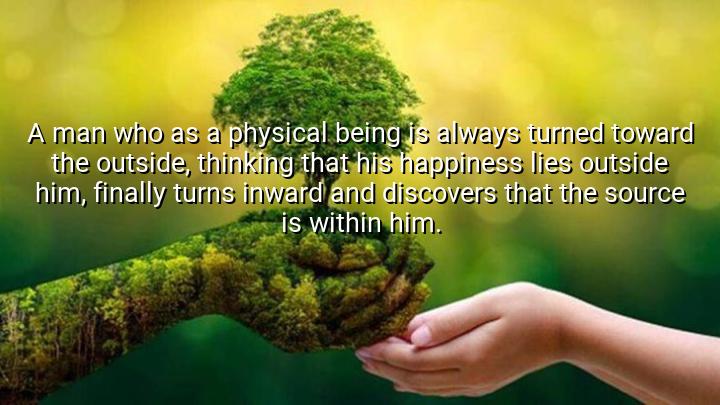




Søren Kierkegaard’s quote explores the journey of self-discovery and the nature of happiness. It suggests that many people, in their pursuit of happiness, initially look for it outside themselves, believing that external circumstances, achievements, or possessions will bring them fulfillment. This outward search often leads to frustration or disillusionment, as true happiness cannot be solely dependent on external factors. Kierkegaard proposes that, in time, individuals turn inward and realize that the source of true happiness lies within themselves.
The idea of turning inward signifies a shift from external validation to self-awareness. This inward journey requires individuals to reflect on their inner lives, thoughts, and emotions, recognizing that contentment is rooted in one’s own perspective and understanding of the world, rather than in external achievements or possessions. Kierkegaard’s quote calls for a deeper exploration of one’s own soul and consciousness, suggesting that personal fulfillment comes from aligning with one’s true self.
Kierkegaard, known as a philosopher of existentialism, often explored the themes of individuality, freedom, and self-realization. His works focus on the complexity of human existence and the struggle to find authentic meaning in life. This quote reflects his belief that while the external world may offer fleeting pleasures, true and lasting happiness can only be found when we confront and understand our own inner being.
Originating from his existential philosophy, the quote underscores Kierkegaard’s conviction that happiness is not something that can be attained by pursuing external desires or conforming to societal expectations. Instead, it requires an internal journey of self-discovery and acceptance. By looking inward, a person discovers that the source of their happiness has always been with them, waiting to be recognized.

AAdministratorAdministrator
Welcome, honored guests. Please leave a comment, we will respond soon