

A man is a man in every part of the world. It has nothing to do with race. It has to do with the culture and education that each man has received since he was a child, in his home. It has to do with how he was raised.
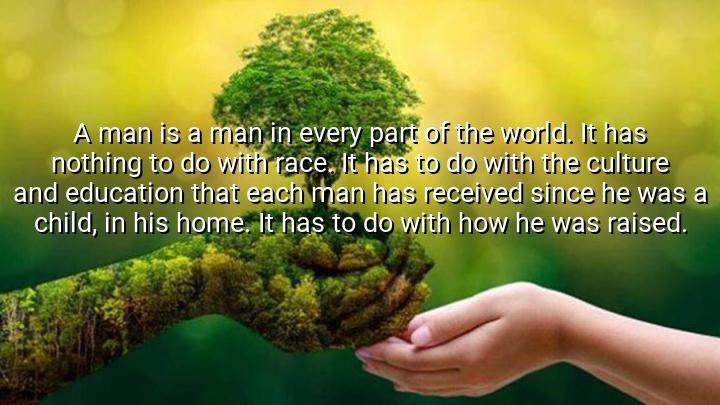




Alicia Machado's quote stresses the universal humanity of every individual, regardless of race or geographic location. According to Machado, being a "man" transcends superficial differences such as skin color or ethnic background. Instead, it is deeply rooted in the culture and education that an individual receives from an early age. The way a person is raised within their family and community shapes their character, values, and behavior, making these formative experiences more significant than any external factors.
Machado is emphasizing that the essence of a person is shaped not by their race, but by the influences of family upbringing and the societal norms they are exposed to as children. She suggests that the way someone is raised, including their values, education, and worldview, determines much of their identity and behavior throughout life. This challenges the idea that certain characteristics or abilities are inherent based on race, advocating for a more inclusive and understanding approach to human diversity.
The quote reflects a perspective that recognizes the power of environment and education in forming individuals. Machado seems to be calling for a focus on raising children in a way that fosters respect, empathy, and education, rather than focusing on divisive labels based on race. In this sense, the quote encourages societal reflection on the importance of creating positive cultural and educational environments for children, to shape a more understanding and compassionate world.
The origin of this quote lies within Machado’s broader views on identity and inclusivity, informed by her personal experiences in the public eye as a Miss Universe winner. Machado, who has faced criticism and scrutiny over her physical appearance, uses this quote to advocate for a deeper understanding of what makes someone who they are—beyond external attributes—and emphasizes the importance of cultural values and personal upbringing in defining character.

AAdministratorAdministrator
Welcome, honored guests. Please leave a comment, we will respond soon