

A lot of our communication has now become digital, and it does not mimic the natural way we have evolved to communicate with each other, so it's almost like we have this muscle, these social-emotional skills, and they're atrophying, right?
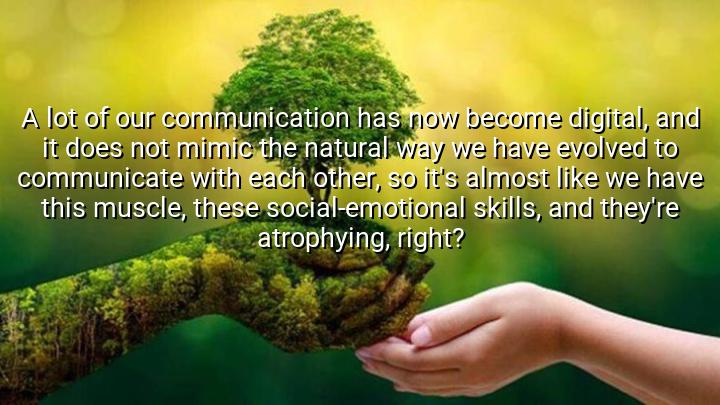




Rana el Kaliouby’s quote speaks to the impact of digital communication on human interactions. She suggests that much of how we now communicate, through texting, emails, and social media, doesn't replicate the natural, face-to-face communication methods we've evolved to use. In person, we rely on body language, facial expressions, and tone of voice to convey emotions and understand each other, but these elements are often lost in digital interactions, making communication feel more mechanical and less human.
El Kaliouby also compares these changes to a muscle that, when not used properly, begins to atrophy. She implies that our social-emotional skills, the ones we naturally developed over centuries for in-person interactions, are being underused in a world that increasingly favors virtual connections. As a result, we may be losing the ability to connect with others on a deep emotional level, which could hinder our ability to navigate complex social situations effectively.
The quote highlights the importance of emotional intelligence and social skills in communication, which are essential for building meaningful relationships. As digital platforms often lack the cues that help us read emotions and empathize with others, el Kaliouby suggests we risk losing our capacity for genuine human connection. She calls attention to the unintended consequences of an increasingly digital society, where we may be evolving away from the face-to-face interactions that are crucial for our emotional well-being.
Ultimately, the origin of the quote lies in el Kaliouby's work as a technology expert and AI researcher. She has long been focused on how artificial intelligence can enhance human understanding of emotions, and her quote sheds light on the potential downside of technology that disrupts natural human communication. Her insights encourage us to be mindful of the changes in how we communicate and the potential consequences of losing touch with our emotional intelligence.

AAdministratorAdministrator
Welcome, honored guests. Please leave a comment, we will respond soon