

A discerning eye needs only a hint, and understatement leaves the imagination free to build its own elaborations.
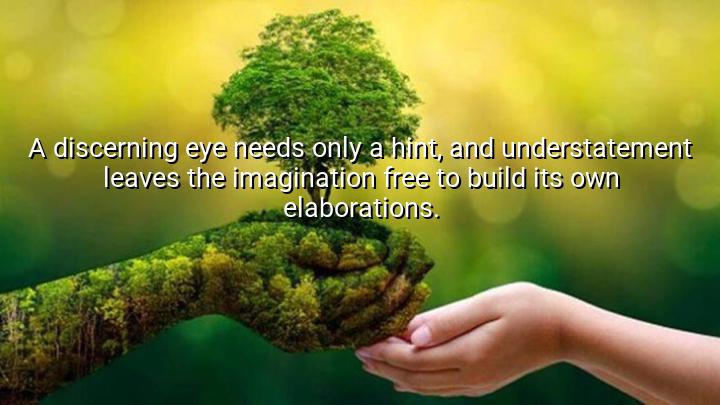




The quote "A discerning eye needs only a hint, and understatement leaves the imagination free to build its own elaborations" by Russell Page highlights the power of subtlety and the importance of restraint in artistic expression. Page, a renowned landscape designer, suggests that the best works are often those that leave something to the viewer’s imagination, allowing them to fill in the gaps and create their own interpretations. Instead of overwhelming the observer with overt details or grand statements, an understatement invites a deeper engagement, where the mind has the freedom to elaborate and expand upon what is seen or experienced.
In this context, the "discerning eye" refers to someone who is perceptive enough to appreciate the nuance of a situation or work of art, needing only a small hint or suggestion to fully comprehend its meaning or beauty. By understating elements of design, art, or communication, one can create space for the observer’s imagination to roam freely, making the experience more personal and layered. This approach not only encourages a more profound connection with the subject but also stimulates creativity and introspection in the viewer.
The origin of this quote reflects Page's approach to landscape design, where he often emphasized subtlety and restraint. In his work, Page understood that sometimes less is more, and by leaving elements open to interpretation, one can evoke a deeper emotional response. This philosophy of allowing space for imagination is central to many creative fields, from design to literature, where the artist’s role is not just to present the obvious, but to allow for exploration and discovery.
Ultimately, the quote underscores the value of suggestion over excess. By leaving things understated, we allow the imagination to fill in the details, creating a more dynamic and engaging experience. Page’s belief in the power of subtlety reminds us that the most compelling creations often come from the space between what is shown and what is left to be imagined.

AAdministratorAdministrator
Welcome, honored guests. Please leave a comment, we will respond soon