

A death from a long illness is very different from a sudden death. It gives you time to say goodbye and time to adjust to the idea that the beloved will not be with you anymore.
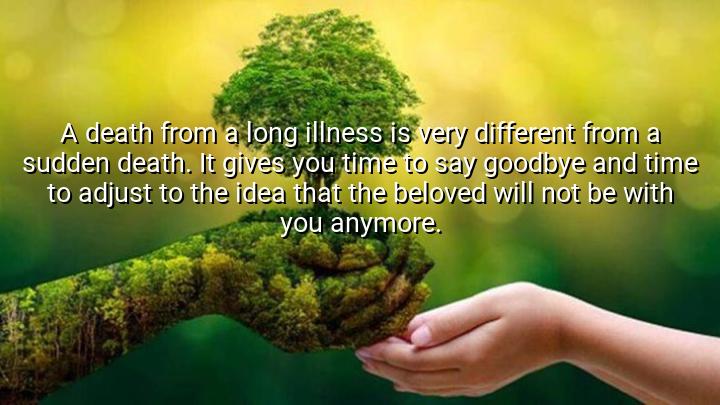




In this quote, Meghan O'Rourke reflects on the profound emotional difference between a death that comes after a long illness and a sudden death. She suggests that when someone dies after a prolonged illness, there is a period of anticipation, allowing loved ones to prepare for the inevitable loss. This time provides an opportunity to say goodbye and emotionally adjust to the reality that the person they care about will no longer be present, making the grieving process more gradual.
O'Rourke’s words highlight the emotional complexity of dying after a long illness. While the prolonged nature of illness can be physically and emotionally draining, it also provides time—time to process the idea of loss and mentally prepare for the final separation. The gradual nature of such a death allows loved ones to adjust, though it is still painful, whereas a sudden death often leaves people with little to no time to prepare for the emotional shock and the feelings of incompleteness that follow.
The quote also touches on the concept of closure. A long illness, despite its toll, can offer moments for reflection, understanding, and saying goodbye in meaningful ways. In contrast, a sudden death can leave unfinished business, unresolved emotions, and a sense of abruptness. O'Rourke’s observation suggests that the anticipation of death, while difficult, might allow for a more peaceful or accepting transition than a sudden, unexpected loss.
Originating from Meghan O'Rourke, a poet and memoirist known for writing about personal loss and grief, this quote reflects her experience with mourning and the complexities of dealing with death. O'Rourke’s works, including her memoir The Long Goodbye, often explore the emotional journey of loss, making her insights particularly poignant for those navigating the challenges of saying goodbye to loved ones. This quote encapsulates the tension between the inevitability of death and the psychological process of preparing for it.

AAdministratorAdministrator
Welcome, honored guests. Please leave a comment, we will respond soon