

You say that you are my judge; I do not know if you are; but take good heed not to judge me ill, because you would put yourself in great peril.
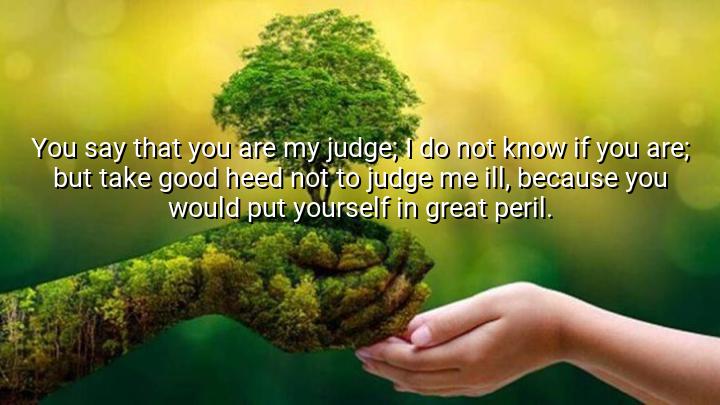




The quote by Joan of Arc reflects her deep confidence in her own convictions and her awareness of the dangers of being judged by others. When she says, "You say that you are my judge," she is acknowledging the power of others to critique or evaluate her actions, but she challenges their authority over her. By questioning whether they truly hold the power to judge her, she asserts her own sense of self-assurance and faith, implying that their judgment may not be as valid as they believe.
The phrase "take good heed not to judge me ill" conveys a warning to those who would criticize her, suggesting that making an unfair or hasty judgment could have significant consequences. Joan of Arc is positioning herself as someone whose actions and intentions are rooted in a higher purpose, and therefore, those who judge her harshly could find themselves in danger. This serves as a reminder of the potential repercussions of misjudging someone who believes their actions are divinely inspired or for a greater good.
The quote also reflects Joan’s awareness of the perils of judgment, especially in her own historical context. As a young woman claiming to have divine guidance, Joan faced intense scrutiny and opposition, particularly from those in power. Her words suggest that misjudging her would not only be a personal error but could also lead to spiritual or moral peril, highlighting the tension between her faith and the skepticism of her detractors.
In essence, this quote showcases Joan of Arc’s defiance in the face of judgment and her belief in the sanctity of her mission. It speaks to her courage, determination, and the inherent risks of questioning someone with a powerful sense of purpose and faith in their actions.

AAdministratorAdministrator
Welcome, honored guests. Please leave a comment, we will respond soon