

You don't teach morals and ethics and empathy and kindness in the schools. You teach that at home, and children learn by example.
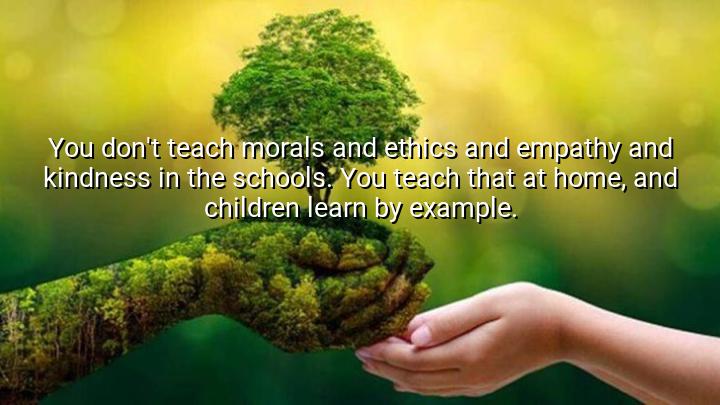




The quote "You don't teach morals and ethics and empathy and kindness in the schools. You teach that at home, and children learn by example" by Judy Sheindlin, better known as Judge Judy, reflects her belief in the importance of parental responsibility in shaping a child's character. Sheindlin emphasizes that moral values and emotional intelligence—such as empathy and kindness—are best taught within the family environment, where children can observe and absorb these qualities through the actions and behavior of their parents. Schools, she argues, focus on academic learning but should not be expected to instill fundamental human values, which are best taught at home.
Sheindlin’s statement highlights the idea that parents are the primary role models in a child’s life and that children learn these core values through observation rather than formal instruction. Parents are responsible for creating an environment where virtues such as empathy and kindness are practiced daily. Children learn by seeing how their parents treat others, how they handle challenges, and how they demonstrate compassion and respect. This reinforces the concept that actions often speak louder than words.
The origin of this quote is tied to Sheindlin's long-standing views on the importance of family and personal responsibility in shaping an individual’s character. As a television personality and former family court judge, Sheindlin frequently addresses issues related to parenting and family dynamics in her legal commentary. She often stresses the significance of good parenting in promoting positive behavior and helping children grow into responsible, compassionate adults.
Ultimately, Sheindlin’s quote serves as a reminder that while schools play a crucial role in education, morality and emotional values are primarily instilled in the home. It challenges the idea that schools alone should be responsible for shaping a child's character, encouraging parents to lead by example and provide the guidance and love necessary for the emotional growth of their children.

AAdministratorAdministrator
Welcome, honored guests. Please leave a comment, we will respond soon