

You can take no credit for beauty at sixteen. But if you are beautiful at sixty, it will be your soul's own doing.
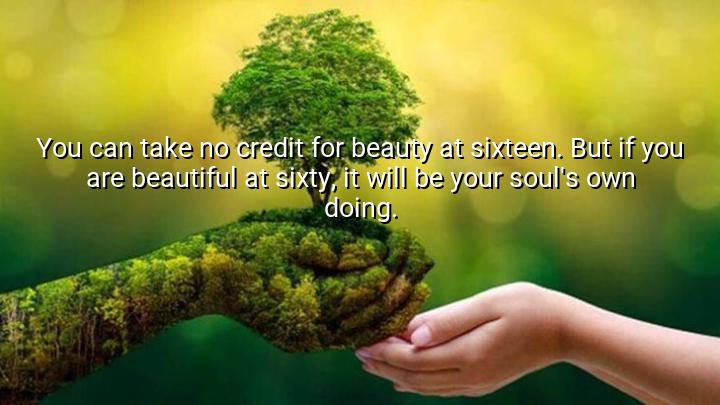




The quote by Marie Stopes emphasizes that youthful beauty is largely a product of external factors such as genetics and age, which one has no control over. At sixteen, beauty is often something that comes naturally and is external, and thus, no credit can be taken for it. However, as one ages, particularly by sixty, beauty becomes a reflection of inner qualities—specifically, the condition of the soul. Stopes suggests that if a person retains beauty in later years, it is a result of how they have lived their life, cultivated their inner strength, and nurtured their spirit.
The quote speaks to the idea that true beauty is not just skin-deep but is deeply connected to one’s character, wisdom, and personal growth. At sixty, beauty becomes a testament to a life lived with grace, kindness, and a well-nurtured soul, rather than youthful features. It highlights the transition from outward appearance to the inner qualities that truly define a person’s attractiveness over time.
Stopes’ words suggest that the qualities of the soul—such as compassion, empathy, and inner peace—manifest in a person’s overall presence and how they are perceived by others. This perspective emphasizes that as we age, the cultivation of our character and how we carry ourselves becomes the real marker of beauty, surpassing the temporary and fleeting nature of physical appearance.
Originating from Marie Stopes, a British author and feminist known for her work in birth control and women's rights, the quote reflects her broader views on personal empowerment and self-worth. Stopes, who advocated for women to take control of their bodies and lives, also recognized the importance of self-love and personal growth in defining true beauty. Her quote encourages individuals to focus on the deeper aspects of life that contribute to lasting beauty.

AAdministratorAdministrator
Welcome, honored guests. Please leave a comment, we will respond soon