

You can give without loving, but you can never love without giving.
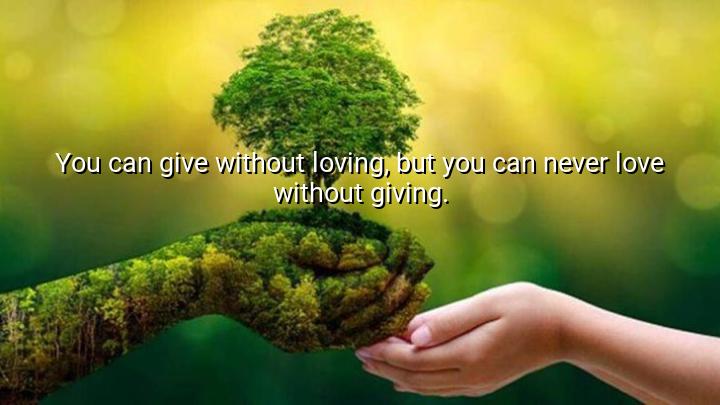




The quote by Robert Louis Stevenson explores the intrinsic link between love and generosity. By stating, "you can give without loving, but you can never love without giving," Stevenson highlights that love is inherently active and selfless. While material or superficial gifts can be offered without genuine feeling, true love always involves a form of giving—whether it is time, attention, care, or emotional support.
Stevenson’s words emphasize that love is not passive; it requires effort, sacrifice, and investment in the well-being of another person. The act of giving becomes a natural expression of love, demonstrating sincerity, commitment, and empathy. Without such giving, love cannot be fully realized or experienced.
The quote also reflects broader themes of human connection and moral responsibility. Stevenson suggests that the essence of love lies in contributing positively to someone else’s life. It is through these acts of giving that relationships are strengthened, trust is built, and emotional bonds are deepened.
Originating from Robert Louis Stevenson, the 19th-century Scottish novelist and essayist, this quote reflects his insight into the moral and emotional dimensions of human relationships. Known for works like Treasure Island and The Strange Case of Dr. Jekyll and Mr. Hyde, Stevenson often explored the interplay of ethics, emotion, and human nature, making this statement a timeless reflection on the selfless nature of true love.

AAdministratorAdministrator
Welcome, honored guests. Please leave a comment, we will respond soon