

You can always tell gifted and highly intelligent people as they always turn to the past. Any young person who knows anything that happened before 1980, or 1990, or 2000 for that matter, is immediately someone who is intelligent, probably creative, maybe a writer. Nobody who is drawn to the past and learning about the past is not gifted.
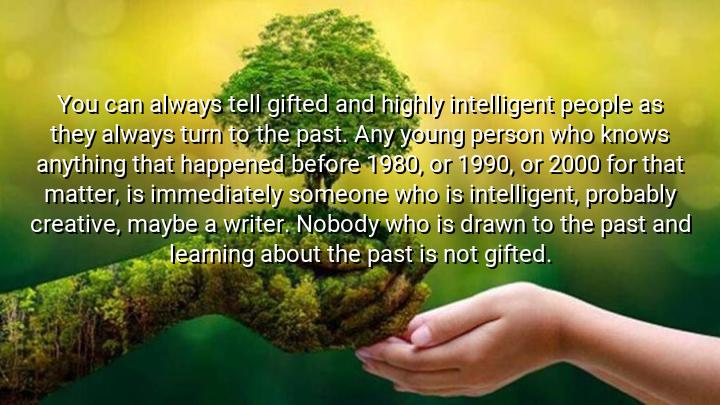




The quote by Mike Nichols highlights the connection between intelligence, creativity, and a deep interest in history. By stating, "You can always tell gifted and highly intelligent people as they always turn to the past," Nichols suggests that those who seek to understand what came before possess a unique capacity for critical thinking and insight. Engaging with the past allows individuals to draw lessons, notice patterns, and develop original ideas, which often manifests in creative or intellectual pursuits such as writing or art.
The meaning of this quote emphasizes the value of historical knowledge as a marker of intellectual depth. Nichols asserts that a true curiosity about history reflects both intelligence and giftedness, as it requires the ability to synthesize information, reflect on human behavior, and understand the consequences of past events. By framing the past as a source of wisdom and inspiration, the quote connects learning with personal and creative development, highlighting the idea that the present and future are enriched by understanding the past.
In terms of origin, this quote comes from Nichols’ reflections as a renowned director, actor, and writer, known for his sharp insights into human nature and culture. Nichols often emphasized the importance of learning from previous generations to inform artistic expression and creative thinking. His observation about the link between giftedness and a fascination with history reflects his broader belief in the role of knowledge and context in fostering creativity and innovation.
Ultimately, the quote underscores the idea that turning to the past is not merely a scholarly activity but a hallmark of intellectual curiosity and creativity. Nichols suggests that those who study and appreciate history are more likely to be insightful, inventive, and capable of contributing meaningfully to society, using the lessons of the past to shape the present and future.

AAdministratorAdministrator
Welcome, honored guests. Please leave a comment, we will respond soon