

Words are but wind; and learning is nothing but words; ergo, learning is nothing but wind.
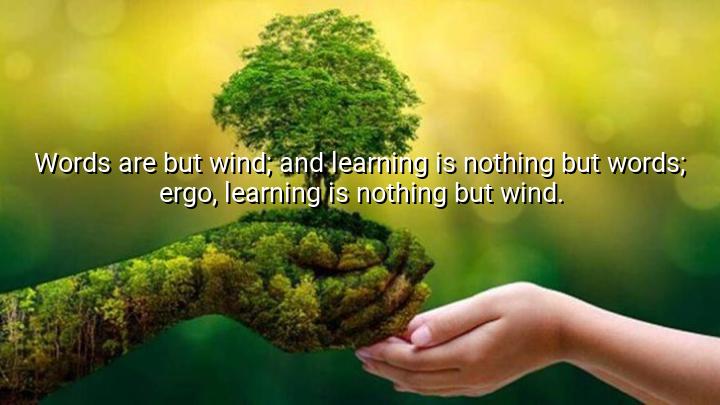




The quote, "Words are but wind; and learning is nothing but words; ergo, learning is nothing but wind," by Jonathan Swift, reflects a satirical perspective on the nature of knowledge and the limitations of superficial learning. Swift suggests that if learning consists solely of words or memorized information without deeper understanding or application, it may be as insubstantial and fleeting as the wind. The quote critiques the notion of empty scholarship or knowledge without practical value.
Jonathan Swift (1667–1745) was an Anglo-Irish satirist, essayist, and author, best known for works like Gulliver’s Travels and A Modest Proposal. Swift often employed wit and irony to comment on human folly, societal norms, and intellectual pretensions. This quote reflects his skepticism about learning that is purely rhetorical or formal, lacking meaningful insight or application.
The statement emphasizes the importance of substance over form in education and intellectual pursuits. Simply accumulating words, facts, or theories does not constitute true knowledge; meaningful learning requires comprehension, reflection, and the ability to apply ideas in real-life contexts. Without these, learning risks being empty and ineffective.
Ultimately, the quote serves as a cautionary reminder to pursue genuine understanding rather than superficial accumulation of words. Swift encourages critical thinking and discernment, highlighting that learning must go beyond language alone to become actionable, transformative, and truly valuable.

AAdministratorAdministrator
Welcome, honored guests. Please leave a comment, we will respond soon