

Words are also seeds, and when dropped into the invisible spiritual substance, they grow and bring forth after their kind.
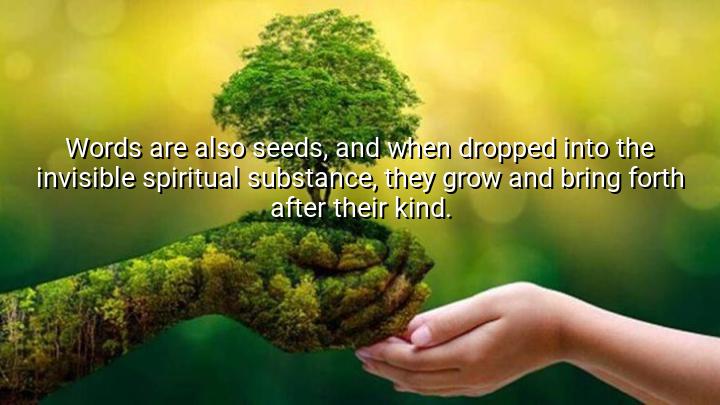




The quote "Words are also seeds, and when dropped into the invisible spiritual substance, they grow and bring forth after their kind." by Charles Fillmore reflects a powerful spiritual perspective on the creative power of language. Fillmore, a co-founder of the Unity Church and a leader in the New Thought movement, believed deeply in the influence of thoughts, beliefs, and spoken words on shaping reality. This quote illustrates the idea that words, like seeds, carry the potential to produce tangible results, especially when planted in the fertile ground of the human spirit or subconscious mind.
By calling words "seeds," Fillmore emphasizes that every spoken or internalized word has creative energy. Just as a seed, when planted in the right environment, grows into a plant, words grow into experiences when planted in the "invisible spiritual substance"—a metaphor for the divine mind, universal consciousness, or inner spiritual realm. The phrase "bring forth after their kind" is a biblical reference from Genesis, suggesting that positive words produce positive outcomes, and negative words will yield negative results.
This quote draws from the New Thought belief system, which teaches that human consciousness, especially through affirmation and intention, plays a key role in manifesting reality. Fillmore and his contemporaries taught that by speaking with faith, clarity, and purpose, individuals could align themselves with divine principles and bring about healing, prosperity, or personal transformation. Thus, speech is not just communication—it’s a form of spiritual planting.
In essence, Fillmore’s quote is both a warning and an encouragement. It reminds us that we must be mindful of our language, because our words carry power to influence our lives and the lives of others. Whether in prayer, affirmation, or everyday speech, the words we choose are not just fleeting sounds—they are spiritual seeds that shape our inner and outer worlds.

AAdministratorAdministrator
Welcome, honored guests. Please leave a comment, we will respond soon