

Where does my body end and an invader start? And cancer, a tumor, is something you grow out of your own tissue. How does that happen? Where does medical ability end and start?
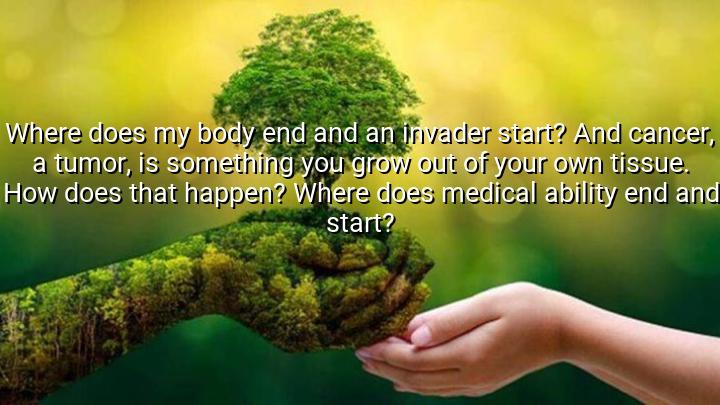




The quote by Dave deBronkart, “Where does my body end and an invader start? And cancer, a tumor, is something you grow out of your own tissue. How does that happen? Where does medical ability end and start?”, raises profound questions about identity, biology, and the boundaries of medicine. At its core, it challenges our understanding of the self and the body. Typically, an invader is considered an external threat, like a virus or bacteria, but cancer is different—it emerges from our own cells. This blurs the line between what belongs to the body and what constitutes a disease, forcing a reconsideration of the concept of “foreign” versus “self.”
The origin of the quote lies in deBronkart’s experience as a cancer patient and an advocate for patient-centered healthcare. He reflects on the paradoxical nature of tumors: although harmful, they are composed of tissue that is inherently part of the body. By asking how something can be both part of the self and simultaneously destructive, he highlights the intricate complexities of human biology. This perspective encourages deeper empathy for patients navigating the bewildering realities of disease.
Moreover, the quote questions the limits of medicine. DeBronkart wonders, “Where does medical ability end and start?”, prompting reflection on what healthcare professionals can realistically do when confronting conditions like cancer. Medicine has tools to treat, diagnose, and sometimes cure, but there are natural boundaries shaped by biology, technology, and knowledge. By framing the question this way, he underscores the tension between the power of medicine and the mysteries of the body.
Ultimately, this quote is both philosophical and practical. It invites readers to think about the interconnectedness of the body and disease, the limits of medical intervention, and the deep existential questions raised when our own tissues betray us. DeBronkart’s words serve as a reminder that healing is not just a technical endeavor but also an exploration of identity, control, and understanding the body at its most intricate level.
If you want, I can also make a condensed, punchy version of this explanation highlighting just the key ideas for easier reading. Do you want me to do that?

AAdministratorAdministrator
Welcome, honored guests. Please leave a comment, we will respond soon