

When you say a situation or a person is hopeless, you are slamming the door in the face of God.
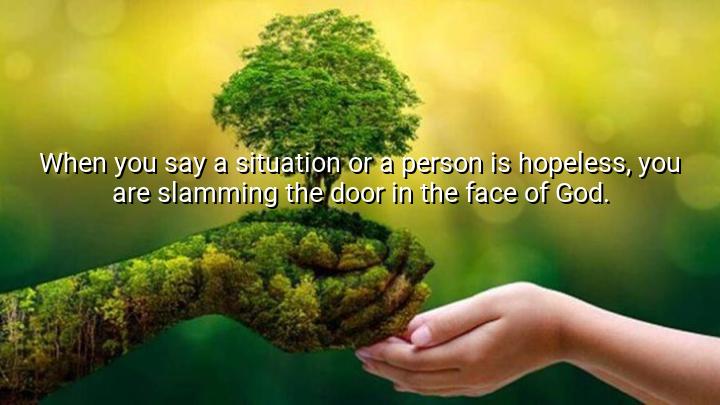




In the quote, "When you say a situation or a person is hopeless, you are slamming the door in the face of God," Charles L. Allen, an American Methodist pastor and author, is suggesting that despair and the belief that something or someone is beyond help is a denial of divine possibility and intervention. Allen is emphasizing that by labeling a situation or a person as hopeless, you are essentially rejecting the belief that God can bring about change, healing, or redemption. The imagery of "slamming the door" highlights the finality and closed-mindedness of such a statement.
Allen’s statement implies that hope is an essential aspect of faith, and by dismissing hope, one is cutting off the opportunity for divine intervention or transformation. In the context of Christian theology, God is often seen as a source of miracles and redemption, and to lose hope is to reject the possibility that God can work in difficult circumstances. The quote encourages individuals to keep their hearts and minds open to the potential for change, no matter how dire a situation may seem.
The origin of this quote stems from Allen's teachings, which often focused on the power of faith and the transformative impact of hope. His work was aimed at encouraging individuals to trust in God's ability to work in their lives, even when things appear bleak. The quote reflects his belief in the importance of maintaining hope and optimism, as these virtues are seen as pathways to experiencing divine help and guidance.
Ultimately, Allen’s quote reminds us that even in the most challenging times, one should not lose hope or resign to the belief that change is impossible. By keeping the door open to God, we invite the possibility of miracles, growth, and transformation. The quote serves as a powerful reminder that faith and hope are integral to overcoming life's difficulties, and that, with God's help, no situation is truly hopeless.

AAdministratorAdministrator
Welcome, honored guests. Please leave a comment, we will respond soon