

When we rebuild a house, we are rebuilding a home. When we recover from disaster, we are rebuilding lives and livelihoods.
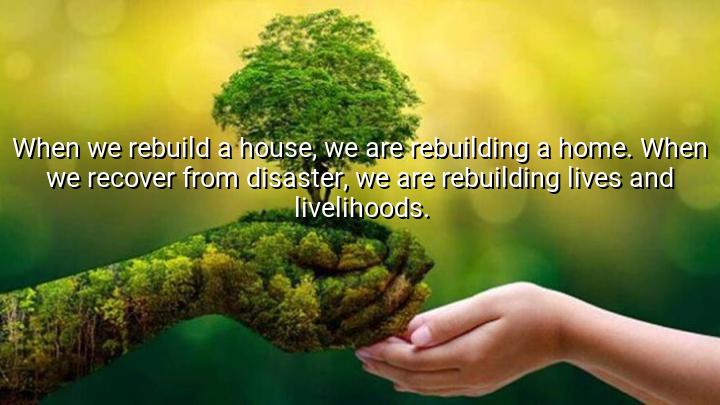




In this quote, Sri Mulyani Indrawati emphasizes the deep, symbolic connection between the act of rebuilding and the restoration of both physical spaces and emotional well-being. She draws a parallel between rebuilding a house and rebuilding a home, suggesting that the process goes beyond mere construction. It's about recreating a sense of comfort, security, and belonging. A house may be physically restored, but it is the emotional and personal significance of a home that truly matters.
Indrawati extends this idea to a broader context, specifically when dealing with the aftermath of a disaster. She argues that recovering from a disaster is not just about rebuilding infrastructure or material assets but about restoring the lives and livelihoods of those affected. The quote underscores the importance of addressing both the physical and emotional needs of individuals and communities in the recovery process, recognizing that true healing comes from a comprehensive approach to recovery.
The emphasis on both lives and livelihoods points to a holistic view of recovery, where the focus is not only on physical reconstruction but also on ensuring that people can rebuild their economic stability and well-being. This reflects a broader, more empathetic approach to disaster recovery, where the social, emotional, and economic aspects of life are all considered when helping individuals and communities move forward.
Ultimately, Indrawati’s quote serves as a reminder that the process of rebuilding after any crisis—be it a natural disaster or a personal loss—is much more than just restoring physical spaces or assets. It involves restoring dignity, hope, and a sense of community, all of which are necessary for a successful and meaningful recovery.

AAdministratorAdministrator
Welcome, honored guests. Please leave a comment, we will respond soon