

When we meet real tragedy in life, we can react in two ways - either by losing hope and falling into self-destructive habits, or by using the challenge to find our inner strength. Thanks to the teachings of Buddha, I have been able to take this second way.
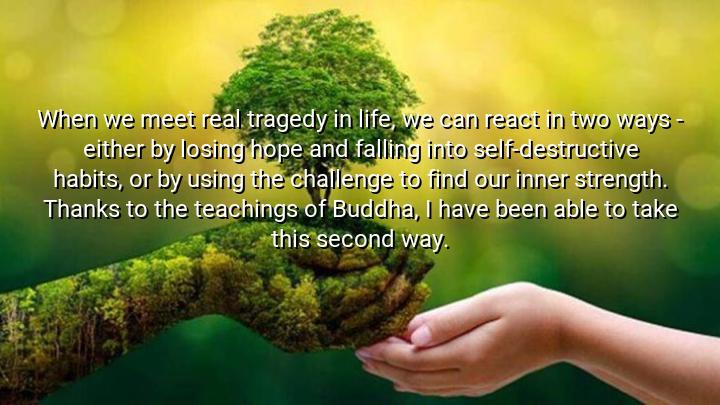




The Dalai Lama's quote reflects the dual nature of how individuals can respond to tragedy. He suggests that when confronted with life’s most difficult moments, people can either succumb to hopelessness, allowing themselves to fall into self-destructive habits, or they can use adversity as a means of growth. The quote emphasizes the power of choice in determining how we navigate through hardship, highlighting that suffering can either break us or lead us to discover our inner strength.
The Dalai Lama attributes his own ability to respond to tragedy in a constructive way to the teachings of Buddha. Buddhist philosophy encourages acceptance of suffering as part of the human condition and emphasizes the path to enlightenment through compassion, mindfulness, and wisdom. For the Dalai Lama, the Buddhist teachings serve as a guiding framework, allowing him to transform personal suffering into a source of strength and resilience. This outlook can be seen as an example of mindful living, where one consciously chooses to rise above adversity rather than being consumed by it.
The idea presented here is consistent with the Buddhist view of impermanence—that all things, including suffering, are temporary and ever-changing. The Dalai Lama encourages people to embrace this truth and use it to their advantage. Rather than letting tragic events dictate their lives, they can find deeper meaning and wisdom by viewing challenges as opportunities for self-discovery and spiritual growth.
This quote is rooted in the Dalai Lama’s life and his teachings as a spiritual leader. Having experienced immense personal tragedy, including the exile from Tibet and the ongoing oppression of his people, his ability to maintain a sense of peace and compassion demonstrates the very essence of his message. His words not only reflect his personal philosophy but also offer guidance to others facing difficult situations, encouraging them to use their pain as a tool for transformation and inner peace.

AAdministratorAdministrator
Welcome, honored guests. Please leave a comment, we will respond soon