

When the soldiers came home from Vietnam, there were no parades, no celebrations. So they built the Vietnam Memorial for themselves.
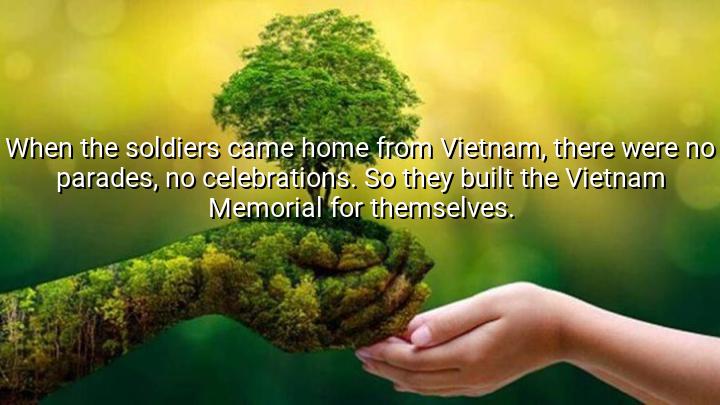




In this quote, William Westmoreland reflects on the lack of recognition and support that Vietnam War veterans received upon returning home. He points out that unlike veterans from other wars, there were no parades or celebrations to honor their service. This lack of appreciation and public acknowledgment contributed to a sense of alienation and neglect, as the soldiers returned to a society that often viewed them with hostility or indifference due to the controversial nature of the Vietnam War.
Westmoreland then mentions the creation of the Vietnam Memorial as a way for the veterans to honor themselves, since the nation failed to do so. The memorial, which stands as a solemn tribute to those who lost their lives, became a space for the veterans to reclaim some form of recognition and respect for their sacrifices. By building the memorial, they symbolically created a place for healing, remembrance, and reflection, where their service could be acknowledged in a meaningful way.
The quote also highlights the idea of self-recognition and the importance of creating spaces for personal and collective healing when external recognition is lacking. The veterans, feeling abandoned by the broader society, took it upon themselves to build a memorial that would serve as a testament to their sacrifice and service. This underscores the emotional and psychological toll the war had on the soldiers, and the need for a collective space to process the trauma and loss.
Ultimately, Westmoreland’s quote reflects the deep sense of injustice felt by many Vietnam War veterans, who were denied the proper recognition and honor upon their return. The Vietnam Memorial, as he suggests, became a symbolic way for these veterans to gain the acknowledgment that they deserved, a place where their sacrifices could be remembered and celebrated despite the country's failure to do so when they first returned home.

AAdministratorAdministrator
Welcome, honored guests. Please leave a comment, we will respond soon