

When I was learning to creep, my mother set me down on the beach to see what I thought of it. I crawled straight for the coming wave and was just through the wall of green when she caught my heels.
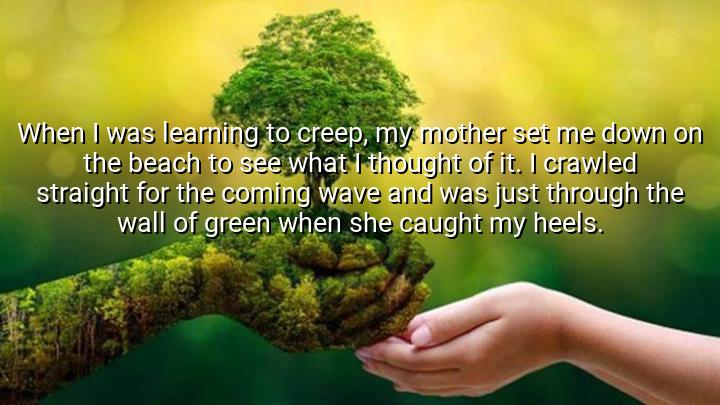




The quote by Sylvia Plath captures a vivid moment of childhood exploration and the balance between curiosity and protection. As she recalls learning to creep, Plath emphasizes the innocence and boldness of a child, eager to engage with the world without fear. The act of crawling straight for the coming wave symbolizes the natural drive to explore, even when danger or risk is present.
Plath’s mother plays a crucial role in this memory, representing guidance and careful intervention. By catching her heels just as she reaches the wave, her mother prevents potential harm while allowing Plath to experience a sense of adventure. This interaction highlights the delicate balance between freedom and safety, showing how parental influence shapes early experiences of the world.
The origin of this quote is drawn from Plath’s autobiographical reflections, where she often explored themes of childhood, growth, and identity. Her poetic style transforms a simple memory into a rich metaphor for learning, risk-taking, and parental support, demonstrating her keen observational skills and emotional insight even at a young age. The imagery of the wall of green conveys both the beauty and danger inherent in the natural world and in life itself.
Ultimately, the quote speaks to the universal experience of growing up, where the interplay of curiosity, courage, and guidance shapes our understanding of the world. It reminds readers that early experiences, though small, are foundational in teaching lessons about risk, exploration, and the protective love that allows one to venture safely into new experiences.
If you want, I can also create a shorter 2-paragraph version that captures the essence for easier reflection or discussion.

AAdministratorAdministrator
Welcome, honored guests. Please leave a comment, we will respond soon