

When I was a kid, I have two dreams. I want to be a baseball player. Hometown, Hiroshima, has a Japanese baseball franchise team called Hiroshima Carps. You know, and then I want to be a sushi chef. I want to make own restaurant - sushi restaurant.
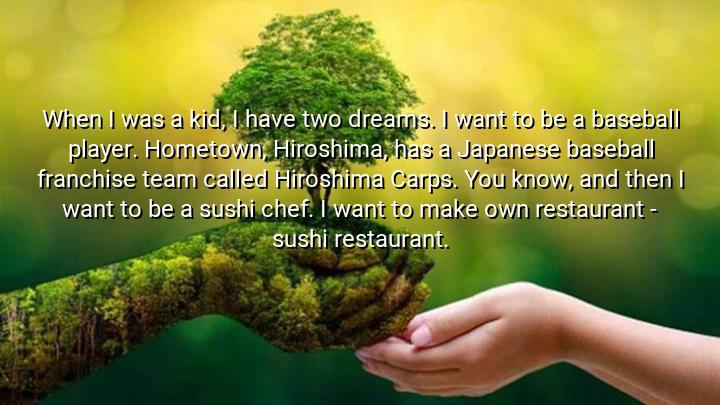




Masaharu Morimoto’s quote reflects his early dreams and the aspirations he had as a child. He mentions two passions that shaped his childhood: his desire to be a baseball player and his ambition to become a sushi chef with his own restaurant. These two dreams represent his deep connection to his hometown of Hiroshima, where the local Hiroshima Carps baseball team is a significant part of the culture. Morimoto's choice of these dreams suggests his early admiration for both sports and the culinary arts, showing how his roots in Hiroshima influenced his goals.
The quote also demonstrates how Morimoto's persistence and passion shaped his career path. Although he did not become a professional baseball player, he went on to achieve great success in the culinary world, becoming an internationally renowned sushi chef. This speaks to the idea that while childhood dreams may evolve over time, the desire to pursue something meaningful remains a driving force. For Morimoto, his early ambitions in baseball and sushi-making eventually converged in his culinary journey.
Morimoto's story of chasing his childhood dreams, from the local streets of Hiroshima to becoming a celebrity chef known for his role on Iron Chef, highlights the importance of passion and dedication. His career path shows how he transformed his early interests into lifelong pursuits. Even though he didn't follow the path of a baseball player, he was able to translate his love for craftsmanship into the world of fine dining, establishing a legacy of excellence in sushi.
Ultimately, the quote serves as a reminder that dreams can evolve, and sometimes the paths we take don’t follow the initial vision we had as children. Morimoto’s success as a sushi chef demonstrates the power of adaptability and the importance of pursuing what truly inspires you, even if it means following a different route than originally imagined.

AAdministratorAdministrator
Welcome, honored guests. Please leave a comment, we will respond soon