

When I am grown to man's estate I shall be very proud and great. And tell the other girls and boys Not to meddle with my toys.
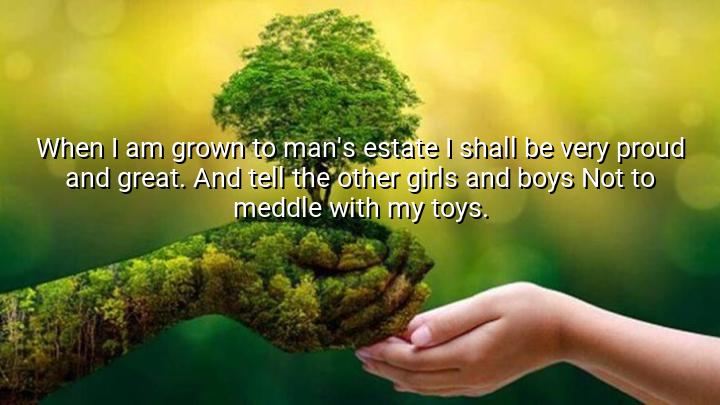




The quote by Robert Louis Stevenson reflects a child's early dreams of maturity and independence. The speaker imagines growing up to become proud and great, symbolizing the common childhood desire to attain status and control over one’s life. This ambition to be powerful and self-sufficient is part of the natural progression toward adulthood, where one seeks to assert authority and claim ownership over their possessions, in this case, their toys.
The second part of the quote, “Not to meddle with my toys,” emphasizes a desire for personal space and autonomy. As children often experience a lack of control over their environment, this wish to protect their possessions reflects a deeper longing for respect and the ability to make decisions without interference. It is a clear expression of the child's attempt to establish boundaries as they grow and become more aware of their rights and desires.
Stevenson’s quote, originating from his collection of poems for children, showcases his ability to capture the essence of childhood through simple but meaningful language. It is both playful and insightful, offering a glimpse into the universal experience of growing up. The sense of pride and the wish to be great aligns with how children often view the future, imagining themselves in powerful positions where they can control their surroundings and gain respect from others.
In essence, the quote speaks to the human condition, particularly the natural growth from childhood to adulthood. It highlights the aspiration to become self-reliant and assertive, traits often associated with maturity, while also giving voice to the innate desire for ownership and control over one’s personal world.

AAdministratorAdministrator
Welcome, honored guests. Please leave a comment, we will respond soon